Journal
Knitting Victorian Mittens (And What They Taught Me That Reading Couldn’t)
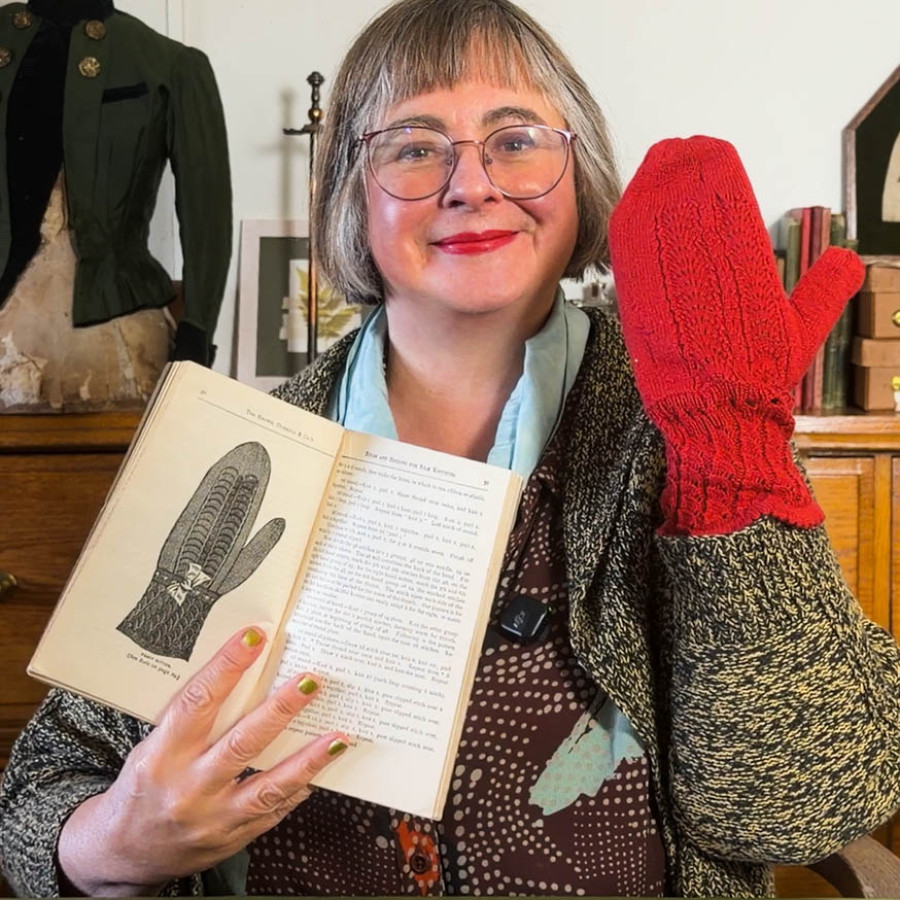
My Maker’s Wardrobe project works the other way round from how I used to make clothes. Instead of falling for a pattern, making it, and then struggling to fit it in with everything else I own, I look for a gap in my wardrobe first and then go and find a pattern to fill it.
This time the gap was mittens. I have a pair of gloves but no mittens at all.
The twist is where I went looking. In The Studio we’re spending time in the period 1880 to 1901, looking at crazy patchwork, the restrictions on women’s lives, and everything that shaped their creative and everyday worlds. It seemed like a good moment to try some experiential history and knit something from the period itself.
The handbook
I spent a happy afternoon going through the knitting magazines and booklets I’ve collected from those years. Mittens turned up in almost all of them, which made the choosing harder rather than easier.
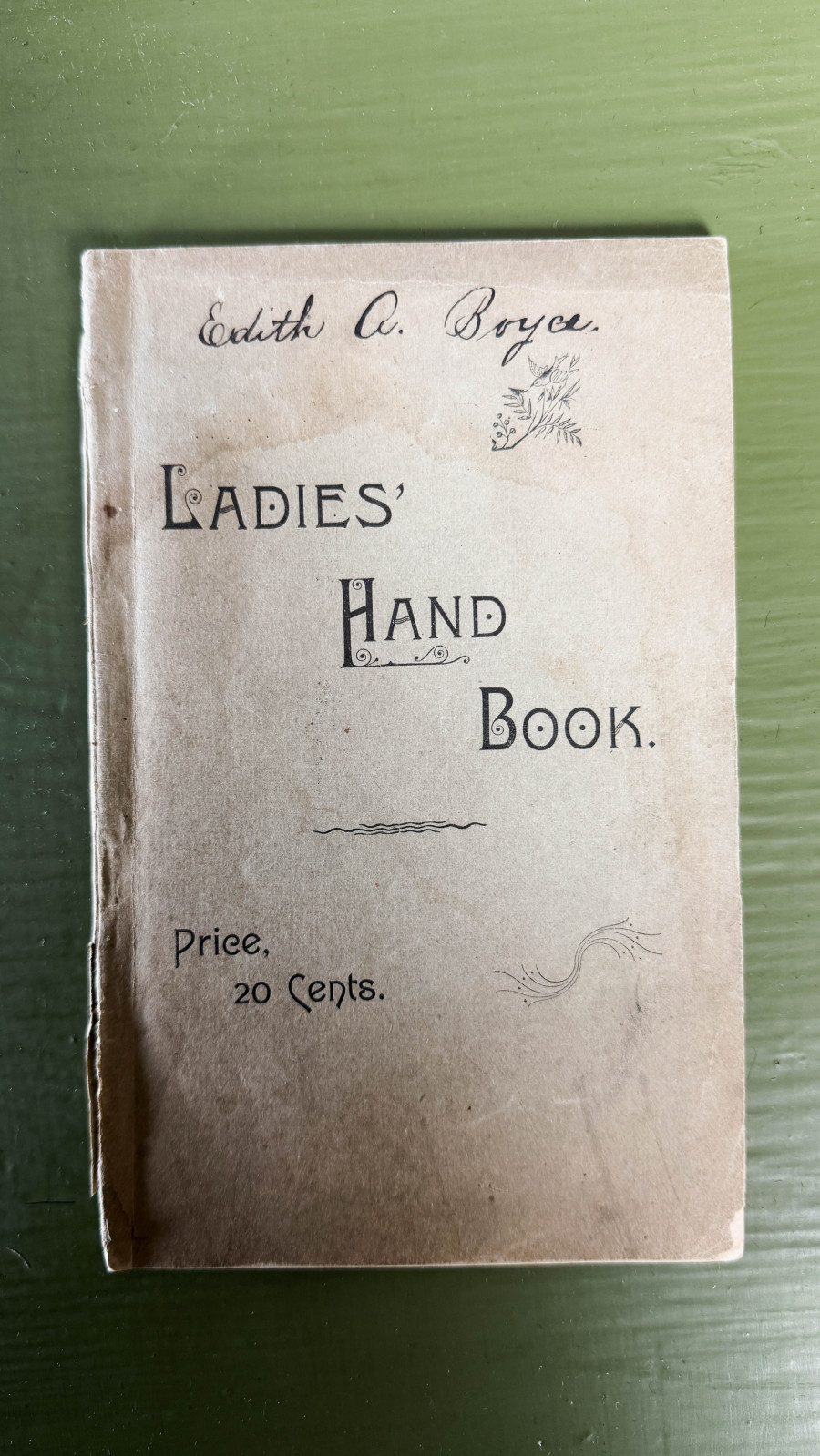
I settled on the Lady’s Handbook. My copy belonged to Edith A. Boyce. It’s American and it was published by Brown, Durrell & Co. c. 1890.
Brown, Durrell & Co. weren’t a publishing house. They were a wholesale dry goods warehouse, supplying shops across the United States. They had a line of silk knitting yarn to sell (probably a luxury, possibly a bit of a novelty) and this book was how they did it. They sold the handbook to the shops they supplied, and the shops sold it on at 20 cents.
On the back cover there’s a line saying their full range of corset waists, as advertised in the book, is always in stock at... and then a space for the shop to add its stamp. Whichever shop Edith bought hers from didn’t bother.
Corsets on every other page
What makes this book so interesting, beyond the patterns, is how blatant the advertising is. There’s boot polish and knitting cotton, safety pins and stocking supporters, dress forms, but mostly there are corsets. Standard corsets and waists, the Dressmaker’s Favorite, Dr Strong’s Tricora contour corset, and plenty more. All of them, presumably, available to shops from the Brown, Durrell warehouse.
The knitting content is all about silk. How to wash it, how to stretch it, how much you’ll need for various things, the stitches, and a long section on silk stockings, which is really what they wanted people to make. A pair of lady’s ribbed silk stockings takes four and a half ounces. The whole book is about the bottom line.
The mittens
The mitten section opens with a little bit of scene setting. It talks about the plain red yarn mittens schoolboys wore to pull sleds and throw snowballs, and the daintier ones their older sisters wore sleighing at Christmas. Then it moves on to the point:
But silk mittens, knit with Brainerd & Armstrong’s knitting silk, are decidedly modern, and while they resemble their predecessors in shape and mode of production, they far surpass them in beauty.
The beauty, it says, comes partly from the colours of the silk and partly from the fashion for fancy patterns, with shells or other ornaments replacing plain ribbing at the wrist. But if a lady doesn’t care for a fancy pattern, plain knitting will do perfectly well because the silk will carry it.
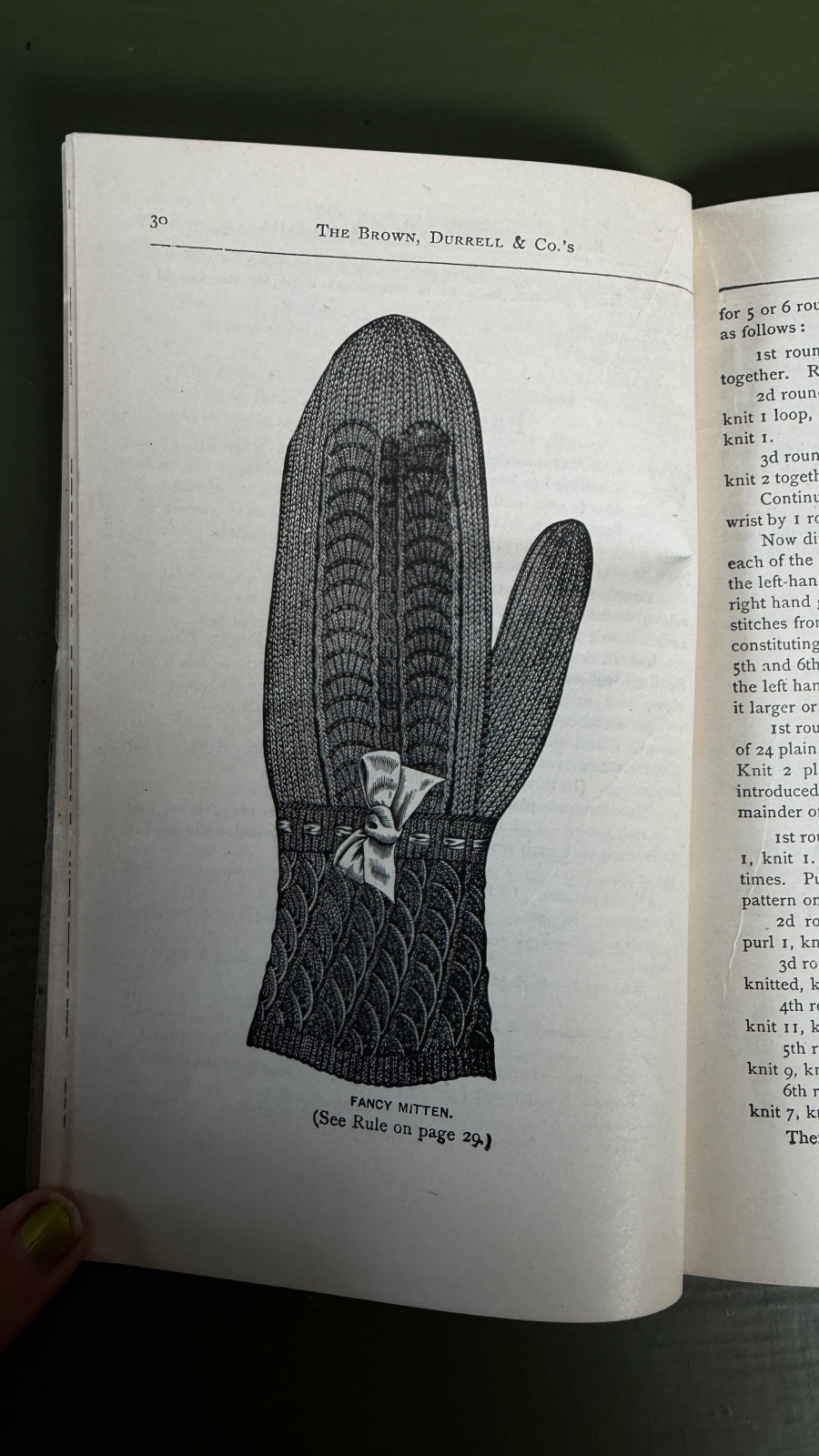
There are infants’ mittens, plain mittens and a lovely fingerless pair, but I chose the fancy mittens. Mostly because they came with a picture. If you’re knitting something you’re not sure about, an illustration helps enormously.
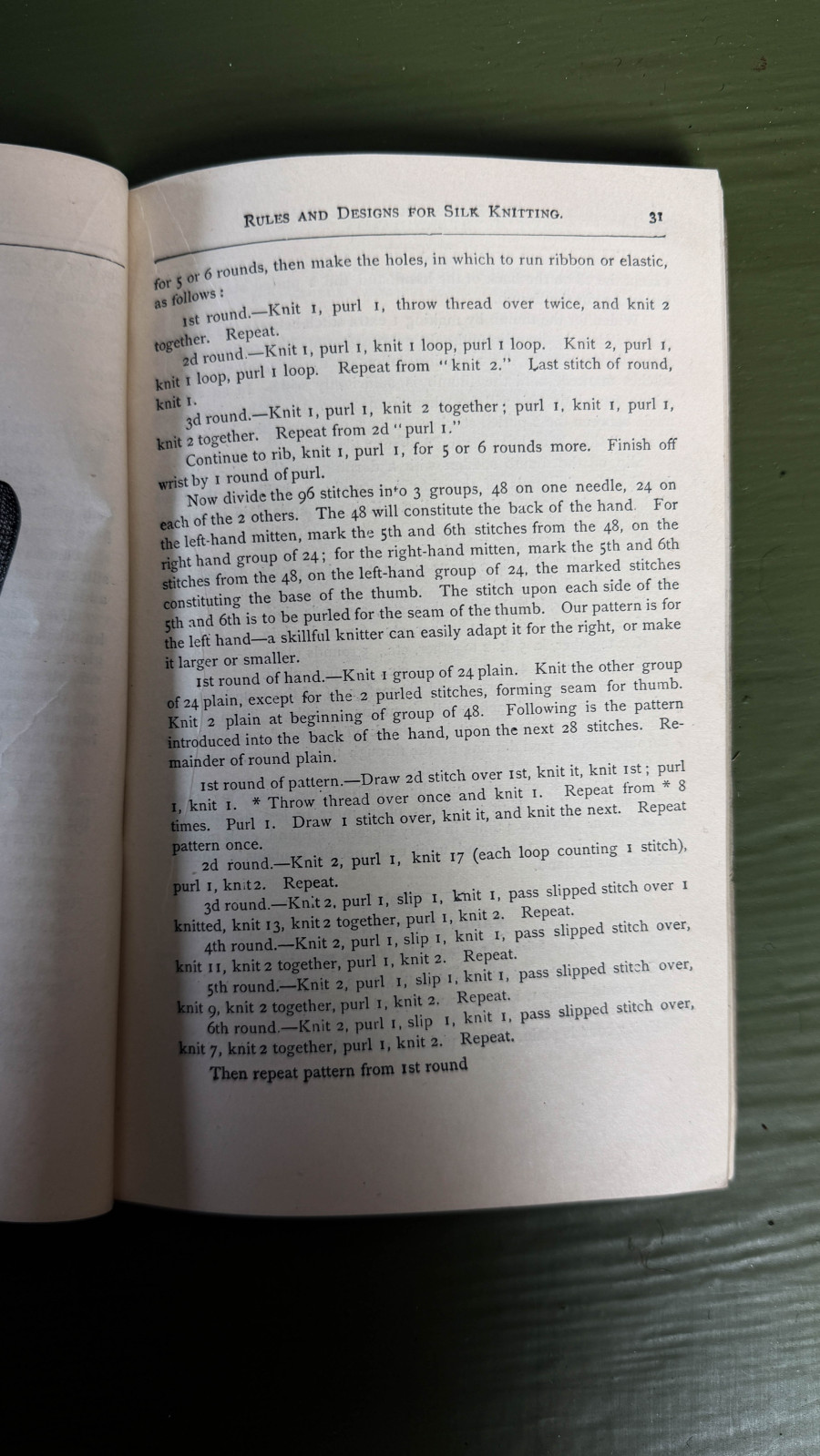
The pattern calls for No. 300 knitting silk and four No. 18 needles. I didn’t have any silk in my stash, but I did have a lace-weight cashmere silk blend, an Italian machine-knitting yarn, which seemed near enough.
Never have I sworn so much at a piece of knitting
I had some steel needles in the right size, 0.5mm. Beautiful, authentic, and completely unworkable.
It should have been easy. Cast on 96 stitches across four needles, knit eight rows plain. But every time I turned the work to the next needle, those heavy, slippery steel needles shot straight out of the stitches. I’d be left with a row of empty loops, trying to get them back onto tiny needles and swearing a great deal.
It became clear that slippery steel needles and I were not going to get along.
KnitPro, it turns out, make 0.5mm needles in carbon fibre with metal tips. The stitches stay put, the tips are still sharp enough for precise work, and above all they’re light, so they don’t fall out every time you turn the knitting.
The other surprise was speed. I’d been daunted by the needle size and assumed one mitten would take months. Once the stitches stopped falling off, it went relatively quickly.
Why are they so big
The finished mitten is enormous. The instructions are for a size six kid glove, and I’m not a size six kid glove (I have short, chubby hands), but even allowing for that, and after blocking it a bit smaller, it’s very roomy.
Then it occurred to me that a middle-class Victorian woman who wore gloves most of the time probably wouldn’t wear mittens on bare hands. She’d wear them over her gloves, a bit like a muff. That would explain the size. A gloved hand fits inside mine perfectly.
Tied in
The pattern makes a real fuss about the finishing. The mittens are meant to be tied at the wrist with pretty ribbons or silk cords, perhaps with tassels, and there’s a neat little bow in the illustration.
I threaded a bit of cotton tape through to try it. On one hand I can just about manage to jab at it and make a bow. On the other hand, I can’t. And I certainly can’t untie them to get myself out again.
So these mittens are a small picture of how restricted many Victorian women’s lives were. You put them on and someone else ties you in. Once you’re out, your hands stay mittened unless you have someone with you who can sort out your outfit. You see the same thing in a lot of clothing of the period. It’s how we dress small children, tying them into their mittens so they can’t lose them.
I won’t be having a ribbon tie. I’m going to look for some kind of decorative elastic instead.
What I only know because I made them
Until I made these, I wouldn’t have known that steel needles at that scale, with yarn that fine, are so hard to handle. I wouldn’t have known that women probably wore these over gloves. And I wouldn’t have noticed that you needed someone to tie you into your mittens before you went out.
All of that came from making them, not from reading about them.
I’m now on the second mitten. When I was two-thirds of the way through the first, it looked so big I thought it would end up as a sample. Now I’ve tried it on, I think the pair will go over my gloves for dog walks. Without the ribbon.
The fancy stitch at the wrist is going to turn up again too. I want to adapt it for a pair of socks.
The Ellen Terry Fascinator
One more thing from the handbook. On page 49 there’s a pattern with a celebrity connection: the Ellen Terry Fascinator.
Ellen Terry was a very popular British actress who had toured in America. Around this time she was known for wearing a large scarf over her head, decorated with artificial flowers or jewellery, that framed and enveloped her face. A fascinator then wasn’t three feathers stuck on your head. It was a big, diaphanous head covering.
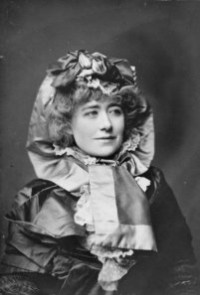
The pattern is simple, if you have the patience:
- Cast on 150 to 200 stitches and knit back and forth until you’ve worked two yards.
- Then knit four, drop one stitch off the left needle, and repeat to the end of the row. Cast off.
- Let the dropped stitches run all the way down to the cast-on edge. They make a striped, lacy pattern.
- Gather one end to four inches wide, fold the gathers in half and sew firmly. Add a bow two inches wide (you’ll need a yard and a half of ribbon).
- Gather the other end and finish with a silk tassel, or leave it open and edge it with a row of shells.
To wear it, put the end with the bow on your head and draw the other end gracefully round your neck so it falls over your shoulder.
Plenty of jumpers designed today use deliberate dropped stitches. Here they are in the 1890s, giving a theatrical lace effect to a head covering. Theatre actress style, if you’re prepared to knit 200 stitches for two yards.
The pattern pages
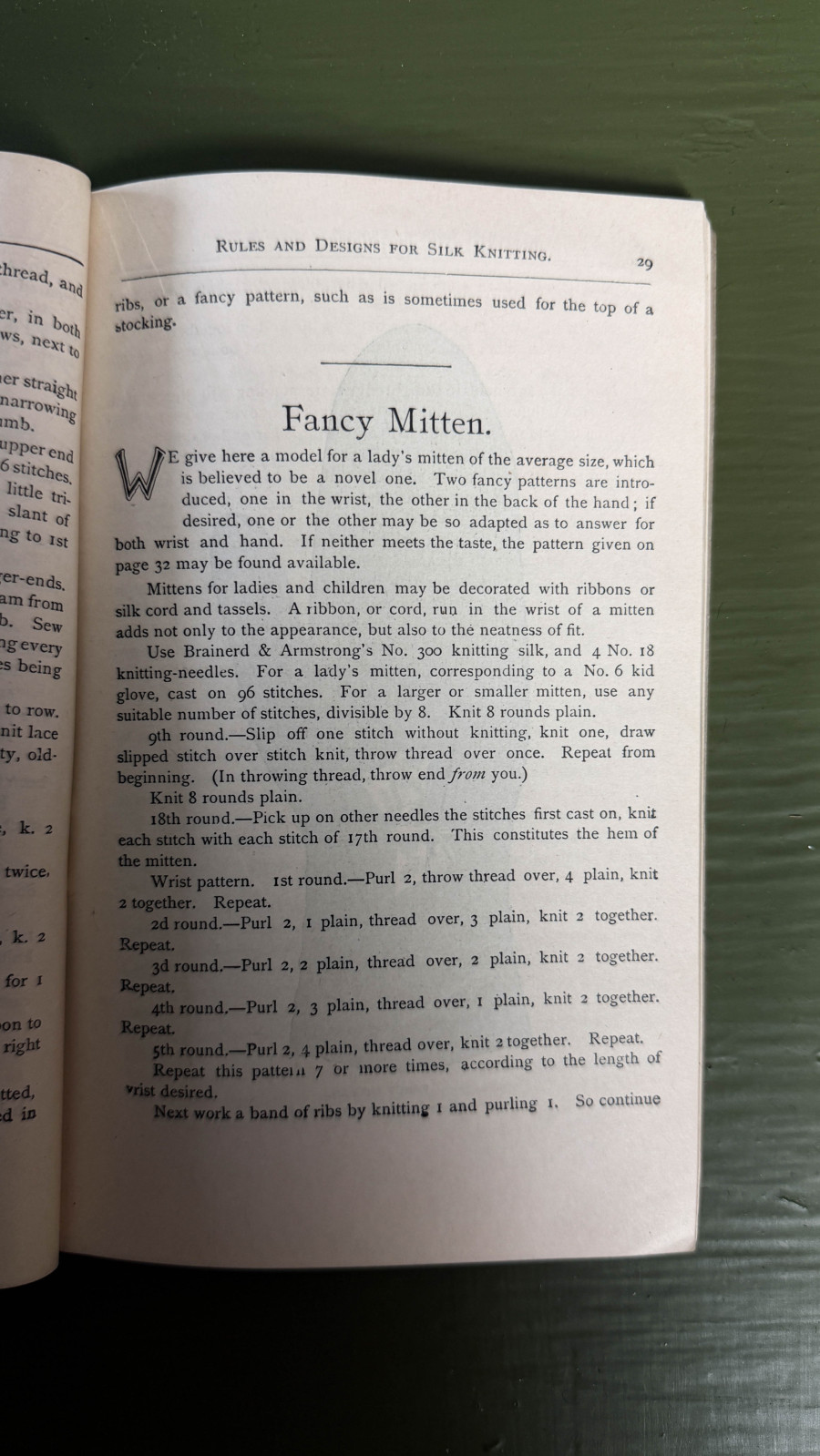
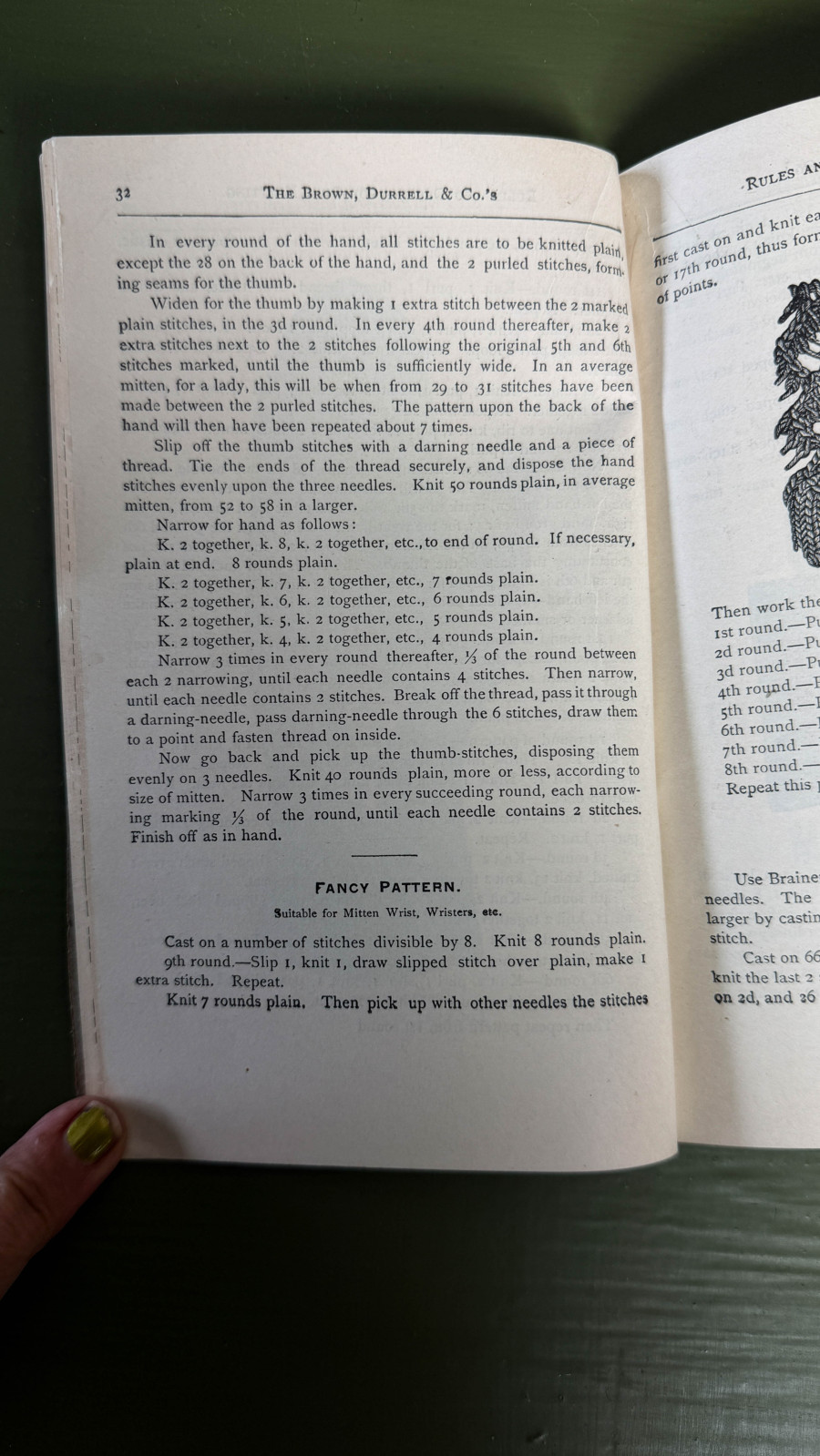
I haven’t scanned the book because it’s fragile and I don’t want to flatten it. I’ve been knitting from photographs on my phone, and they’re below if you’d like to try the fancy mittens yourself.
You may also enjoy …
They Called It Matrons Wear: What 1950s Knitting Patterns Told Women to Be
I needed a summer cardigan and ended up in a 1950s book called Matrons Wear. What I found in there was interesting, and not just the patterns. Free download included.
5 months ago
Make your own felt Christmas tree
how to make a felt vintage Christmas tree decoration
6 years ago
The Problem with “Play” in Creativity (And What It Actually Means)
When perfectionism stops you making, everyone says 'just play.' But what does that actually mean? A different take on creative play from The Studio community.
8 months ago
Making a knitted coat hanger
make a striped knitted clothes hanger beginner knit
3 years ago
 RSS
RSS