Journal
Why Victorian Needlepoint self destructs
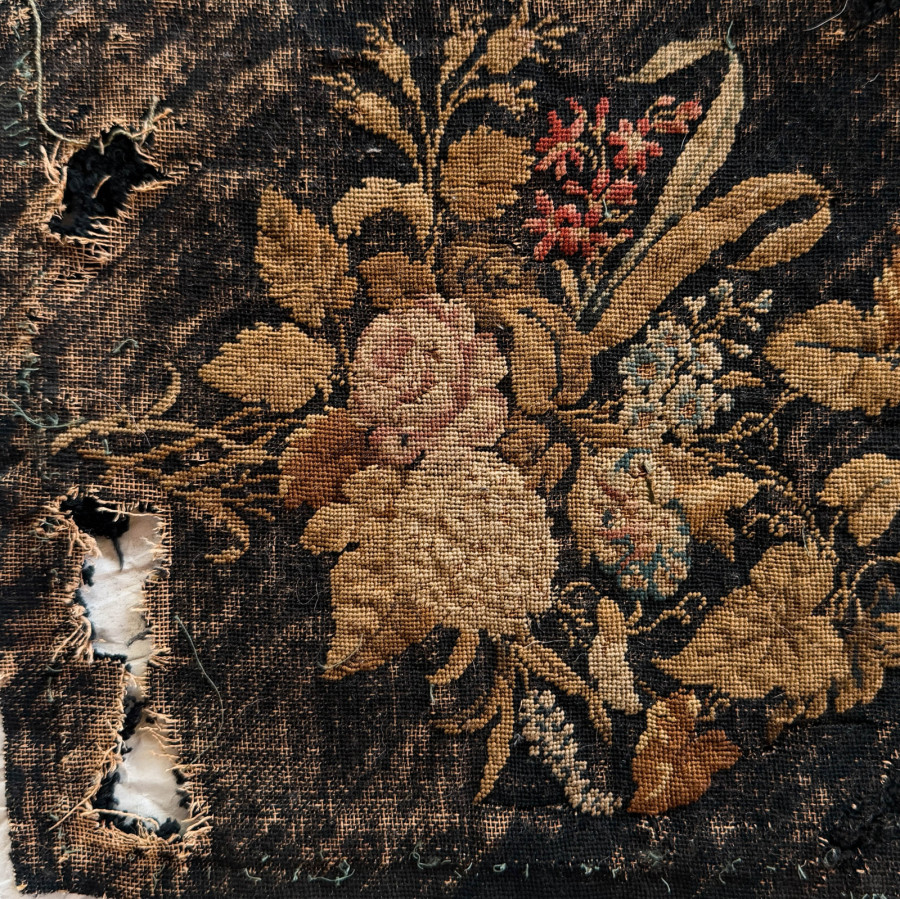
I bought this needlepoint on Vinted for £8. It arrived as a cushion, stabilised on the back with iron-on vilene, which should have been a clue. Underneath, the black background was falling apart. Not fading, not worn. Actively crumbling, the wool fibres breaking down into something that looks more like ash than yarn.
The cause is the dye. To achieve that deep Victorian black, dyers used heavy tannin and iron, often without sufficient rinsing. Over 150 years, the acid produced by that combination has destroyed the wool and started eating through the canvas beneath it. In the film below I look at what happened, what it tells us about using iron in our own natural dyeing practice, and what on earth you do with a piece like this once you understand what’s going on.
You may also enjoy …
Bundle dyeing yarn: a November experiment
Yarn bundled with leaves, frost on the hedgerows, observing the small transformations of late autumn.
10 months ago
Knitting from a 1944 Vogue Pattern: What I’m Making Next for My Maker’s Wardrobe
I'm planning my next cast on from Vogue's 25th Knitting Book, published 1944. A wheat ear rib cardigan, one size, photographed by Lee Miller, with a lot of maths to do before I can start.
4 months ago
Visible mending on a knitted jumper
creative visible mending of jumper, wool darning, sustainable fashion
4 years ago
Elsa Schiaparelli’s knitwear and the women who made it possible
The story of Schiaparelli's early knitwear and the women described as socialites who were, on closer inspection, doing something rather more significant than that.
4 months ago
 RSS
