Journal
Why Noticing Spring Changes Actually Works
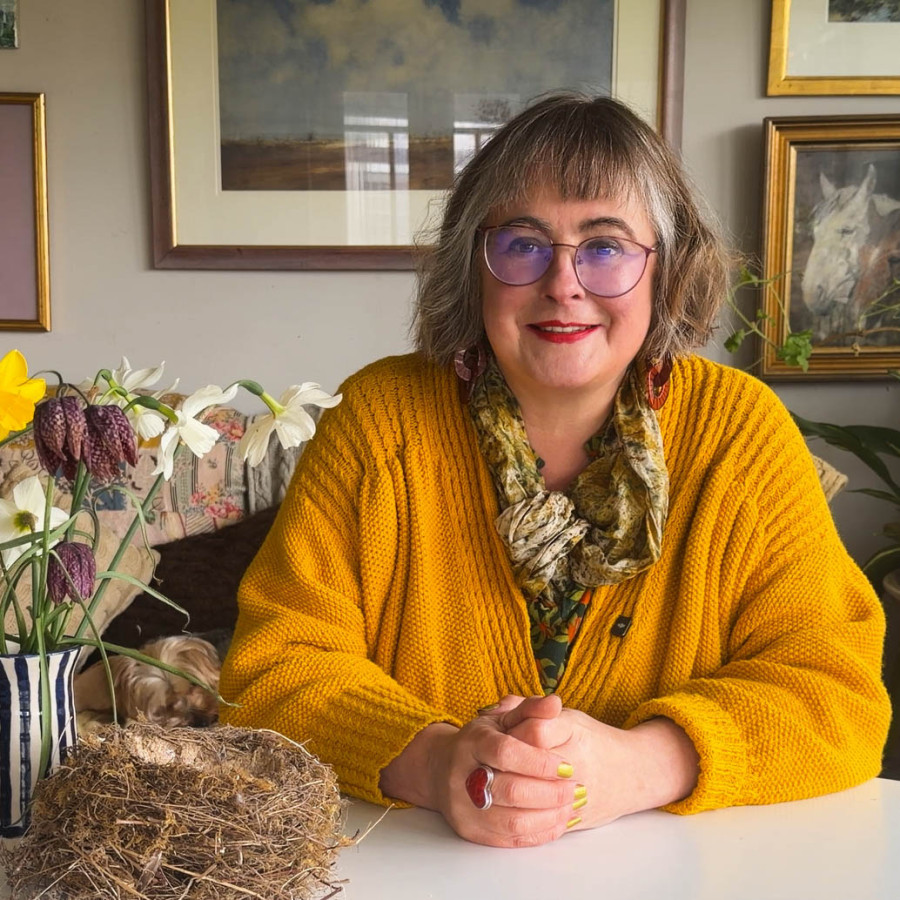
We’re told going for a walk is good for us. And it is. I’ve never come back from one feeling worse than when I set off.
But I’ve been thinking about what’s actually happening, and why it matters to understand it. Because if you know why something works, it’s much easier to make time for it.
The first thing worth knowing is that we’re mammals with a surprisingly sophisticated light detection system, and it isn’t measuring light as an absolute. It’s measuring it against yesterday. The change is what registers.
This is why spring, in the northern hemisphere, is such a potent time. Every day there is more light than the day before, and your brain is tracking all of it. It affects your circadian rhythm, your serotonin and dopamine levels, your mood. Women tend to be more sensitive to this than men. People who aren’t using screens at night more so than those who are. What it produces, when you’re outside in spring, is a kind of expansion. Your brain opening, noticing more, reaching out more. Gardeners will recognise it: suddenly everything feels possible again.
Being outdoors, even on an overcast day, gives you far more of that light than being inside.
But there’s a difference between walking and noticing.
Going out with your headphones in, letting everything pass, is one kind of walk. Going out with some deliberate attention to what’s actually there is something else. What’s in flower? What birds can you hear that weren’t there last month? What’s changed in a familiar street, a view you see every day?
And what seems to help is taking some of it one step further: really looking at a specific thing, taking a photograph, writing something down, telling someone. Not everything, not every time. But occasionally.
This works on the same principle as gratitude journaling. When your brain knows it’s looking for something, it keeps working on it in the background. You prime it. The noticing becomes a habit without you trying.
There’s also something worth saying about names.
In 2007, the Oxford Junior Dictionary removed words like acorn and bluebell and put in technology words instead. There was a lot of outcry. Most of it was directed at the dictionary, which seemed to miss the point. The dictionary was just reflecting a world where children no longer used those words. Robert Macfarlane wrote about it, and The Lost Words came out of that conversation, illustrated by Jackie Morris.
What he said about it has stayed with me: if you can’t name something, you can’t love it. And if you don’t love it, you won’t save it.
So the third layer, when you’re out there noticing: follow the thread occasionally. Find out what something is actually called. Look up the folk history, the old use. Find out that the snake’s head fritillary is Fritillaria meleagris, that Charles Rennie Mackintosh painted it repeatedly. That kind of knowledge changes how you see a thing.
Going outside in spring does something immediate. The light, the noticing, the naming: each one takes it a little further. From good for you, to connected to something larger than yourself.
You may also enjoy …
Two rooms for winter
I've set up these rooms to be the bookends of my day.
11 months ago
You’re Not Lazy: Why Restarting Is Harder Than You Think
Why can't you restart something you've stopped? It's not laziness - it's shame. Here's what's actually happening in your brain, and four practical steps to break the loop.
10 months ago
Perfectionism and making do
how to get over perfectionism
7 years ago
A walk by Loch Lomond
walking loch lomond national park, Scotland
8 years ago
 RSS
RSS