Journal
Two Years, One Walk, and What I Learned About Chronic Pain
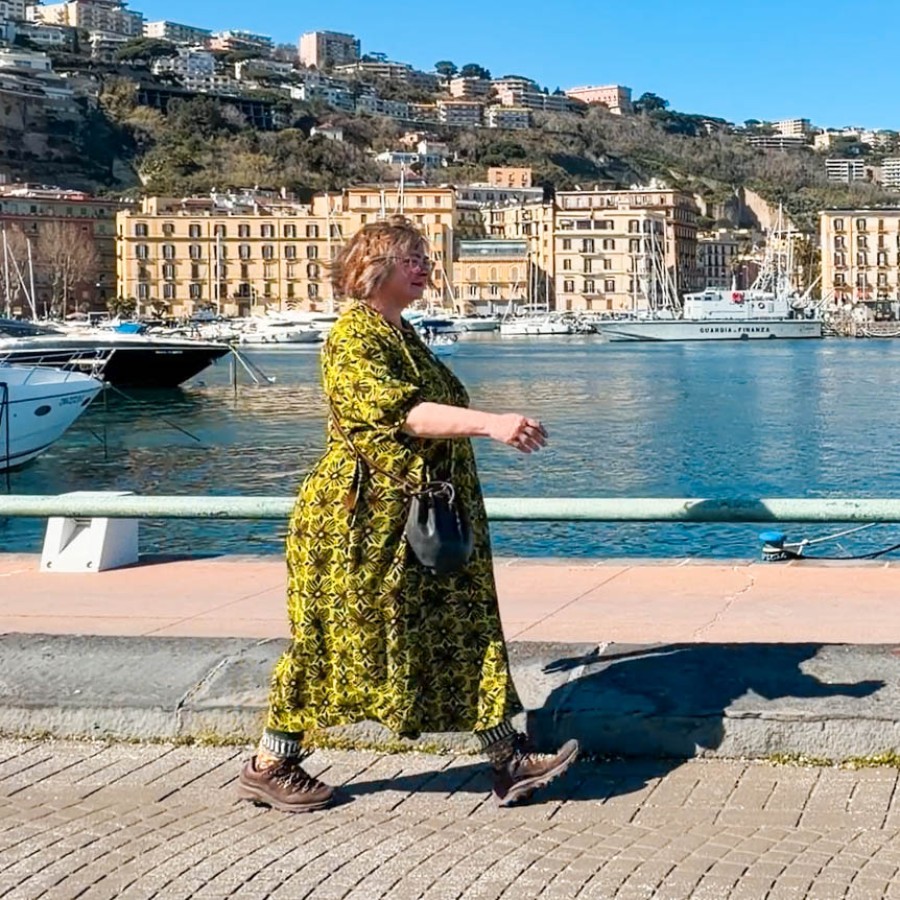
Two years ago, over Easter weekend, I damaged my Achilles tendon on a walk. I knew something was wrong at about the mile point. I walked the whole loop anyway.
That was the first mistake. There were several more to follow.
How I Made It Worse
What happened next is, I think, pretty common for people who live with chronic illness. I added the injury to the pile. A bit of frozen peas, keeping it up for an hour, then trying to walk through the pain, then resting, then trying again. Six months of that particular cycle.
By the time I eventually saw a podiatrist and got a scan, the damage was visible - not just on the scan but to the naked eye. One heel is a noticeably different shape from the other. There was clear tendon damage and a lot of bursitis.
I got custom insoles. I was told not to walk through pain above a four out of ten. I tried to follow that advice. It didn’t improve.
Then last summer, my dad became very ill. I was driving to Edinburgh constantly, manual car, the traffic was awful and crawlled along, clutch up and down constantly. The foot got worse. By late July I was struggling to walk from the car park to the hospital entrance. Every step had a burning sensation when I put my foot down - if you’ve had it, you know exactly what I mean. I was very anxious about it, because walking is central to how I think and function.
My Dad died at the end of August. In September I went back to the podiatrist. Another scan. No change. He suggested I think about an operation. He also mentioned, almost as an aside on the way out, that acupuncture had helped some people, though it wasn’t something he could offer.
Acupuncture it was, then. Except there was a five-month waiting list, so I was looking at February.
The Thing That Actually Shifted It
The following day I had a Reiki appointment with Carrie, my Reiki practitioner. I’m a pragmatic person - touch it, feel it, believe it - and Reiki came at me sideways a few years ago and rather upended that. I’ve written about it elsewhere. The point is, I went to Carrie and I talked about the foot. But I also talked about something else that had been on my mind: whether I’d been leaning too hard into being an introvert, to the point where I was becoming genuinely afraid to go out. Whether, in fact, that fear and the foot pain might be connected.
Carrie didn’t laugh. She did some Reiki on the foot and then sent me some links to interesting reading afterwards.
The next morning, for the first time in two years, I got out of bed and walked to the bathroom without that burning pain. There was still discomfort - the tendon hadn’t magically repaired itself - but the pain was different in quality. Manageable.
Over the following weeks it continued to improve. I started walking further. I cancelled the acupuncture appointment because there wasn’t enough pain left to justify it.
What the Research Showed
The links Carrie sent me were not spiritual. They were about the neuroscience of chronic pain, specifically about something called Pain Reprocessing Therapy (PRT).
The idea is this: with acute pain, the brain registers an injury and sends a danger signal. With chronic pain - particularly when anxiety or overwhelm is present - the brain can take over that pain response and maintain it even after the original injury site has stabilised. Brain imaging shows that chronic pain activates different regions than acute pain does; it moves from the part of the brain connected to the physical site into regions associated with memory, emotion, and storytelling.
This is not the same as saying the pain is imaginary or not real. It is entirely real. But the source, for many people, shifts.
The framework made sense of something that had not made sense before. My injury was real and visible. The treatment hadn’t worked. The pain had got worse in a period of intense stress and fear. And it got better when something shifted my sense of safety.
Whether that’s PRT, neuroplasticity, the specific effect of Reiki, or some combination - I genuinely don’t know. What I do know is that I’m walking again.
What I’m Actually Doing Now
The protocol I’ve been following has two main components.
The first is reassurance - telling myself, specifically and out loud if necessary, that I am safe. This sounds slightly absurd and also, for me, it works. Reiki helps with this; it gives me a very particular sense of being in the right place and moving in the right direction. I find it calming in a way that doesn’t require me to understand why.
The second is almost overexposure - going to the places and situations that felt threatening and showing my body that they’re survivable. Concerts. Busy streets. Trains. And stairs.
Which brings me to Naples, where I’m writing this. If you’ve seen photographs of the city, you’ll know it rises steeply from the sea. Most of that rise is done via staircase. I walked to lunch somewhere I thought was nearby and discovered there were 32 flights of stairs between me and the food. That is, it turns out, quite good rehabilitation.
Why I’m Telling You This
I very rarely talk about health directly in this blog. Everyone’s health is different, everyone’s circumstances are different, and I have no wish to give advice about something I’m not qualified to advise on.
But I’m sharing this because I wish I’d known about this a year and a half ago, before the world started to feel like it was closing in.
If you have pain that gets worse under stress, that is sometimes there and sometimes not, that started after an identifiable injury but didn’t improve as expected - it might be worth looking at this research. Not because I’m saying it’s the answer, but because it’s a possibility that doesn’t seem to get much airtime.
Resources
These are the links Carrie sent me, plus the research I found myself:
Books
- The Way Out by Alan Gordon and Alon Ziv — the most accessible introduction to PRT, written by one of the researchers behind the Boulder study
- Unlearn Your Pain by Dr Howard Schubiner — more clinical in approach, also useful
Podcasts
- Tell Me About Your Pain — hosted by Alan Gordon and Alon Ziv
- Like Mind, Like Body — from the team behind the Curable app; covers the neuroscience behind the mind-body connection in chronic pain
Film
- Pain Brain (on Vimeo) — a documentary following the Boulder Back Pain Study and the development of PRT. Features Alan Gordon and shows brain-based approaches to chronic pain in practice.
For the research itself
- The Boulder Back Pain Study: Ashar et al., JAMA Psychiatry, 2021 — the full paper is accessible via PubMed
- University of Colorado Boulder summary (more readable): CU Boulder Today
- And for balance, a sceptical but fair analysis of the research: PainScience.com
You may also enjoy …
The accidental foraging expert (my tv appearance)
recipe for foraged nettle risotto
7 years ago
Artist Dates as Resistance: Why Random Matters More Than Ever
Artist dates aren't just self-care anymore. In a world of algorithms that show us more of the same, random analog experiences become quiet resistance.
1 month ago
Why Winter Rituals Matter (and what they do to your nervous system)
When everything feels uncertain, our brains crave predictable patterns. Why winter rituals calm your nervous system and how to find your own.
3 months ago
Overwhelm and the fruit harvest
how to deal with overwhelm in your business - my 3 techniques for helping with small business overwhelm
7 years ago
 RSS
RSS