Journal
Why Victorian Needlepoint self destructs
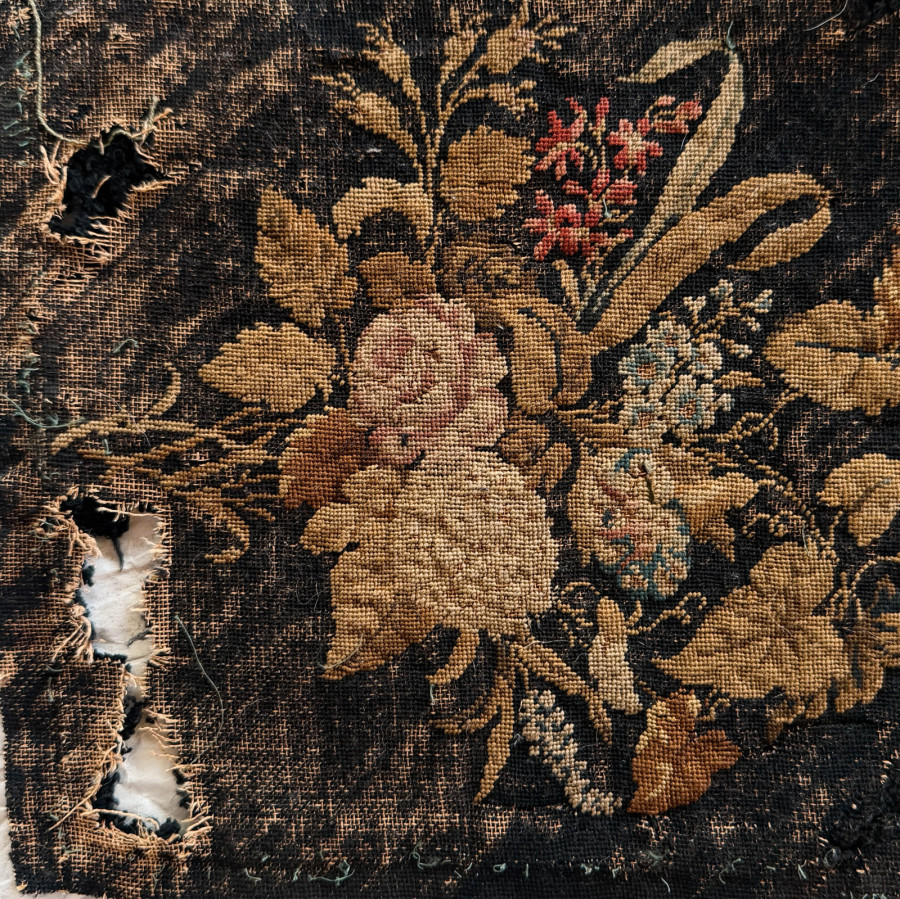
I bought this needlepoint on Vinted for £8. It arrived as a cushion, stabilised on the back with iron-on vilene, which should have been a clue. Underneath, the black background was falling apart. Not fading, not worn. Actively crumbling, the wool fibres breaking down into something that looks more like ash than yarn.
The cause is the dye. To achieve that deep Victorian black, dyers used heavy tannin and iron, often without sufficient rinsing. Over 150 years, the acid produced by that combination has destroyed the wool and started eating through the canvas beneath it. In the film below I look at what happened, what it tells us about using iron in our own natural dyeing practice, and what on earth you do with a piece like this once you understand what’s going on.
You may also enjoy …
How to draw a holly wreath
how to draw a holly wreath for a hand made Christmas card
2 years ago
Making a knitted coat hanger
make a striped knitted clothes hanger beginner knit
3 years ago
Piecing Together a Crazy Quilt’s History, One Patch at a Time
Tracing an antique crazy quilt: how a hat lining and a silk handkerchief helped date it and find where it was made.
1 week ago
A 1920s Piano Shawl Dress tour
A silk shawl reworked into a dress, seam by economical seam. What the maker's choices reveal, and why it's now falling apart in my hands.
1 month ago
 RSS
RSS