Journal
A 1920s Piano Shawl Dress tour
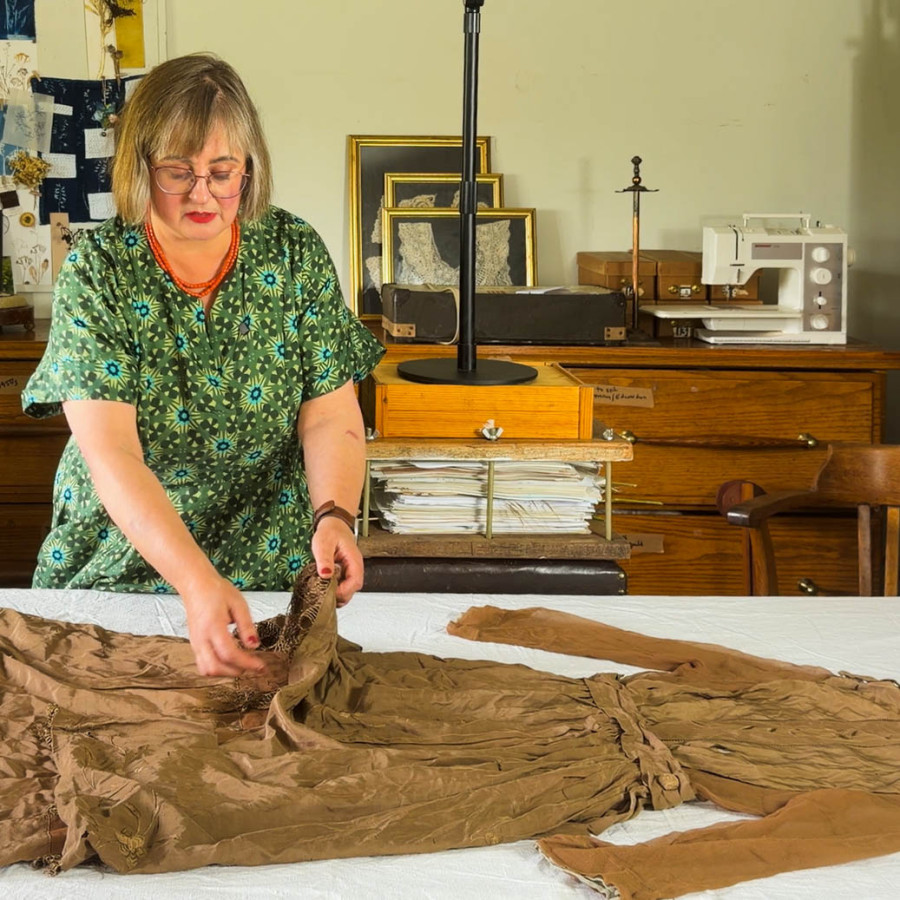
A dress arrived from eBay already disintegrating. It’s made from a silk piano shawl, dyed brown and reworked by hand into a dress, and whatever was used to dye that silk has made it shred faster than I can hold it.
The film covers what I found when I unpacked it and the question I’m still sitting with: what do you do with something too far gone to repair but too interesting to let go? Here I want to give some of the context that didn’t fit into fifteen minutes on camera, particularly around the maker herself.
Dating the shawl versus dating the dress
The shawl itself is most likely from the 1920s, possibly as early as the late 1910s. The silk, the macramé-style fringe, and the weight all point that way.
The dress made from it is a different matter. The style is older than the shawl, closer to 1912 or 1914 than the 1920s or 30s. It’s slightly high waisted, and on me it would fall to the ankle. That’s an old-fashioned silhouette for whoever was wearing it by the time this dress was actually made and worn. I spoke to my Mum about this and she recalled that her Grandmother wore old fashioned, long skirts in the 1940s, just keeping the style of her youth - so maybe it was simply that.
I did wonder whether this was fancy dress or a theatrical costume, something made to evoke an earlier period rather than worn as everyday clothing. But the wear on it argues against that. This dress was used, not stored. And brown is an odd colour to choose if you’re dressing up. It’s not a colour anyone reaches for to look glamorous or notable. It’s a colour you choose because you already have the fabric and you’re making it work.
Working within what she had
What interests me most is the layout. The maker wasn’t cutting freely from a length of new fabric. She had one shawl, already a fixed shape and size, and she had to think hard about how to get an entire dress out of it while using as little as possible.
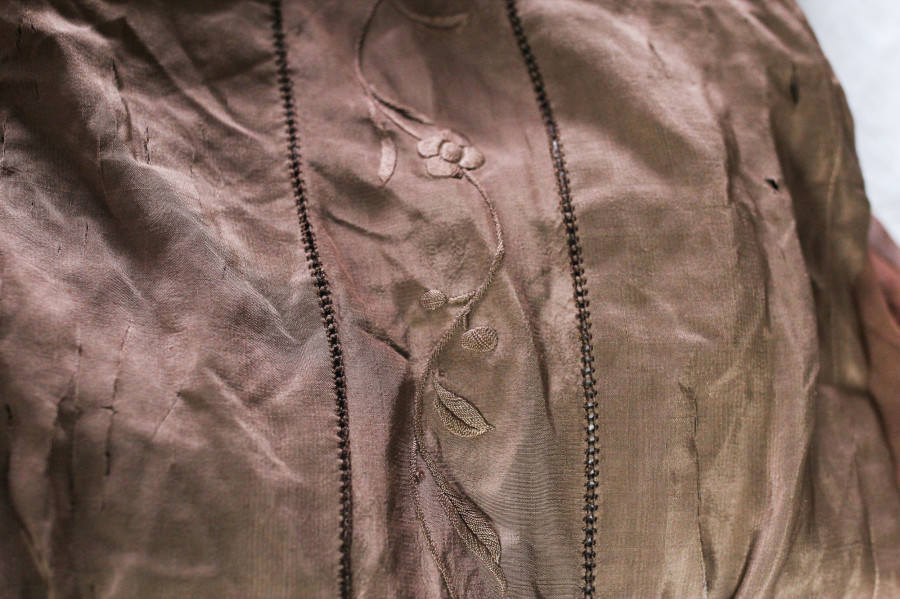
The front of the skirt is a fake wrap, built to look like more fabric than it actually uses. That kind of decision, making something appear more generous than it is, suggests real thought about economy of material. The pieces of embroidery are carefully selected - fabric joined with rows of insertion stitches to make it work.
It’s possible there were contemporary dressmaking instructions for turning shawls into garments this way. I haven’t seen any but its perfectly possible. If it was made in the early 1930s - which is what I suspect - it was the Depression, a time of making new with what you had and lots of ideas for exactly that.
Not the neatest hand
The maker of this dress wasn’t a perfectionist, and I mean that as a compliment. Where seams went squint and wouldn’t show once the dress was worn, she left them unpicked rather than starting again. You can see it in the gathers and in the seams that are tucked under the belt.
What the shawl probably looked like before
I think the shawl was originally cream, before it was dyed brown. The long fringe and the style of embroidery are typical of the shawls embroidered in China and draped over evening dresses worn by flappers (and the more sedate). The long macrame fringe and the full blown roses are a nod to Spain.
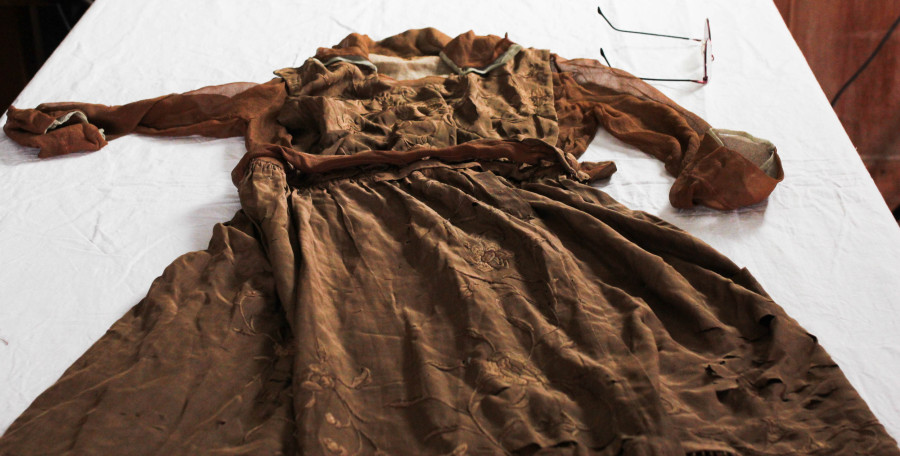
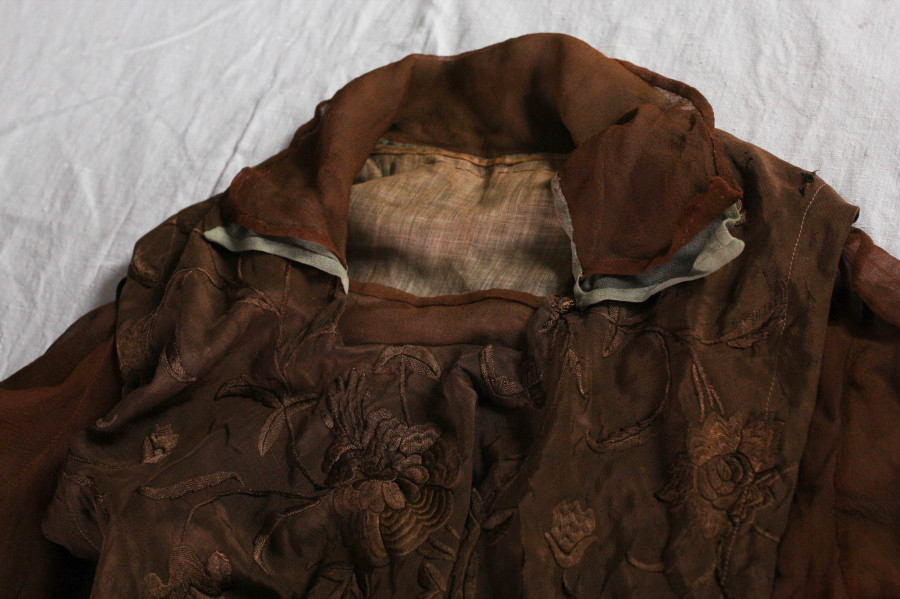
Collar - two different chiffons and then a tacked in washable lining.
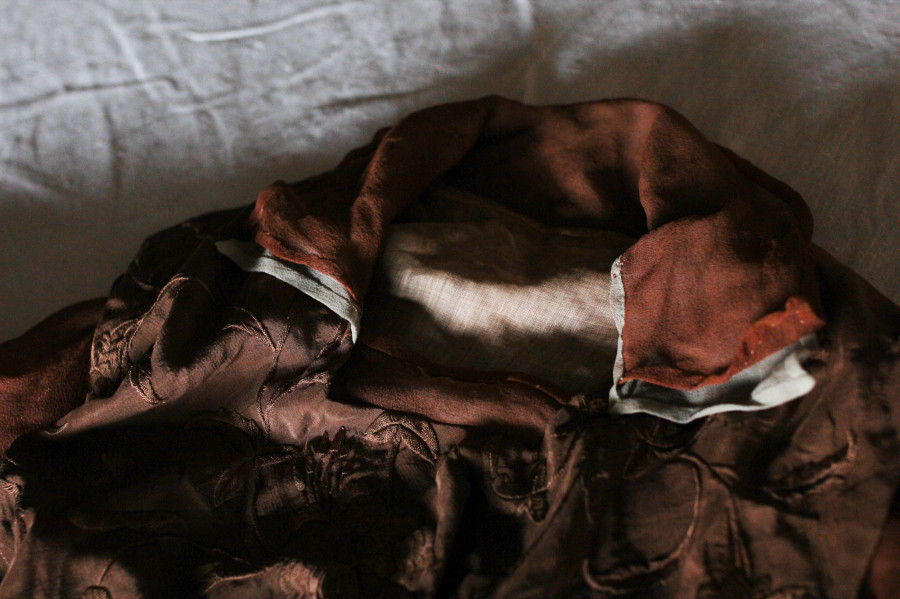
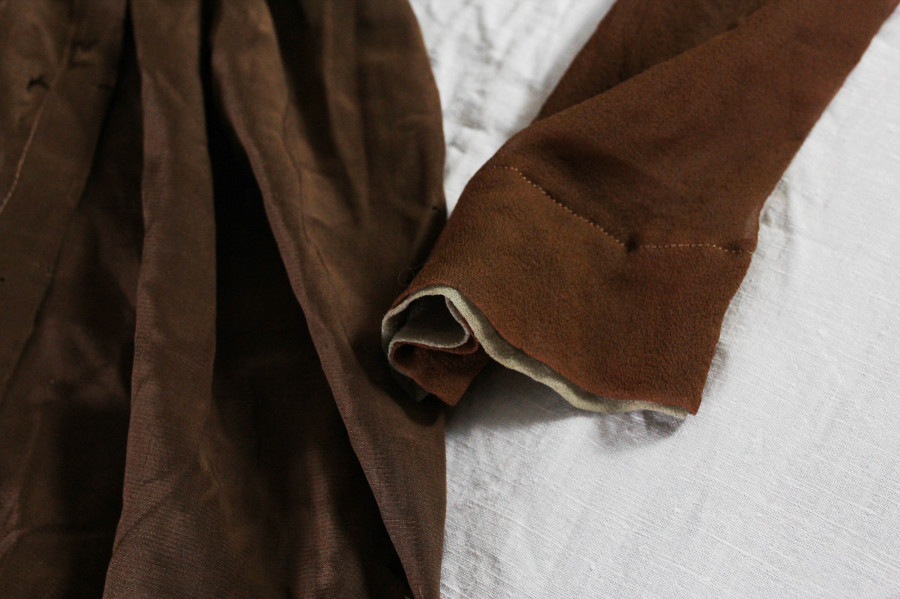
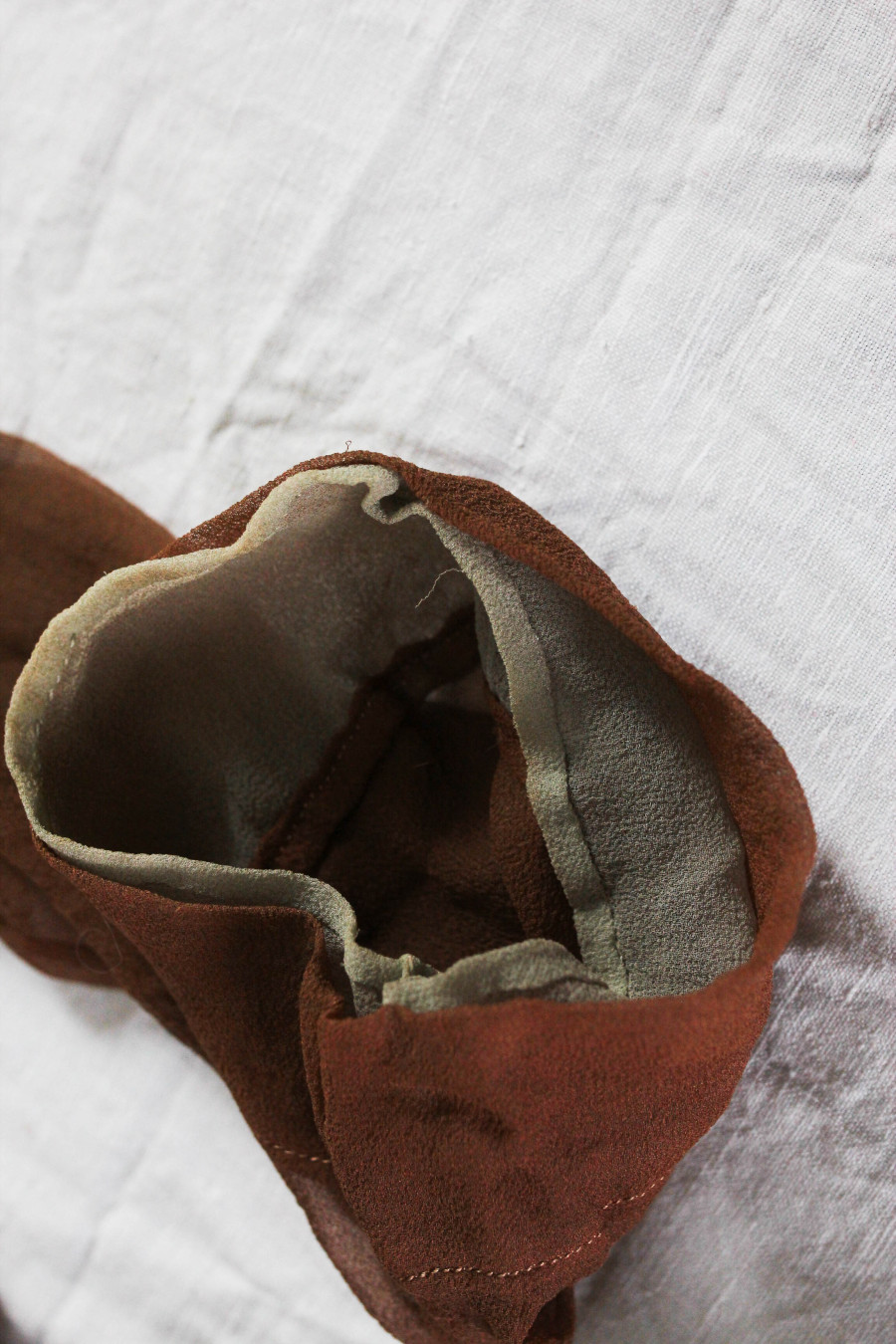
Cuff is also two layers of chiffon.
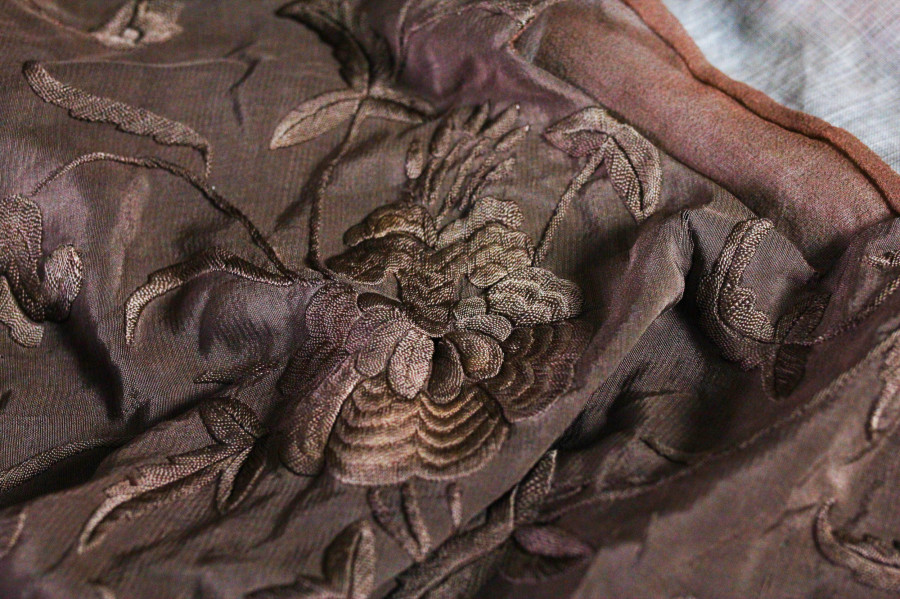
embroidery on the front of the dress.
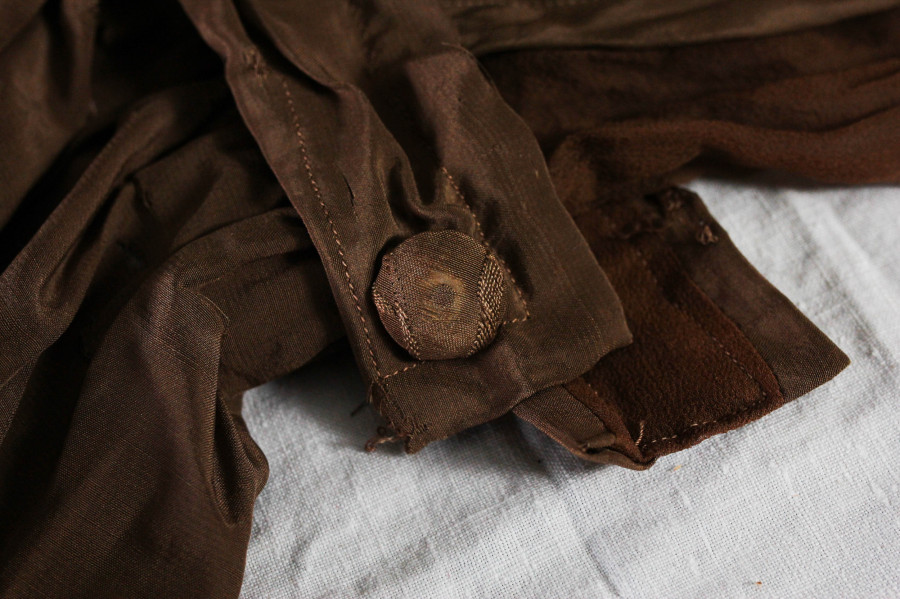
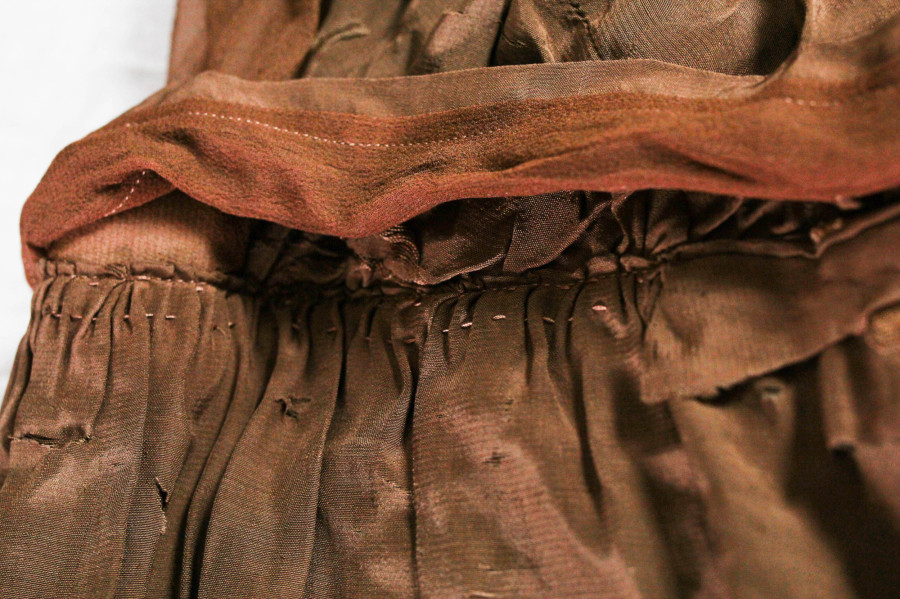
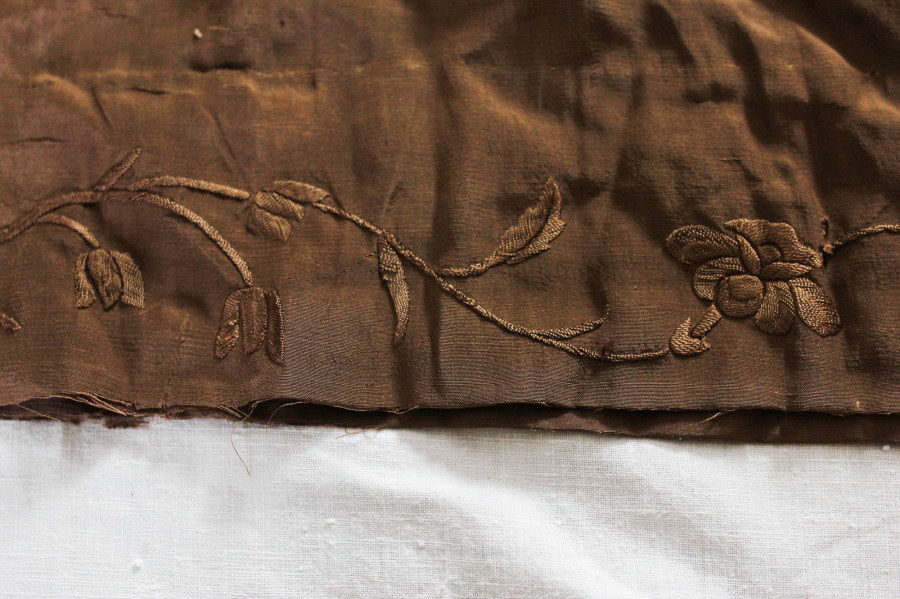
The hem uses a straight embroidered part of the shawl.
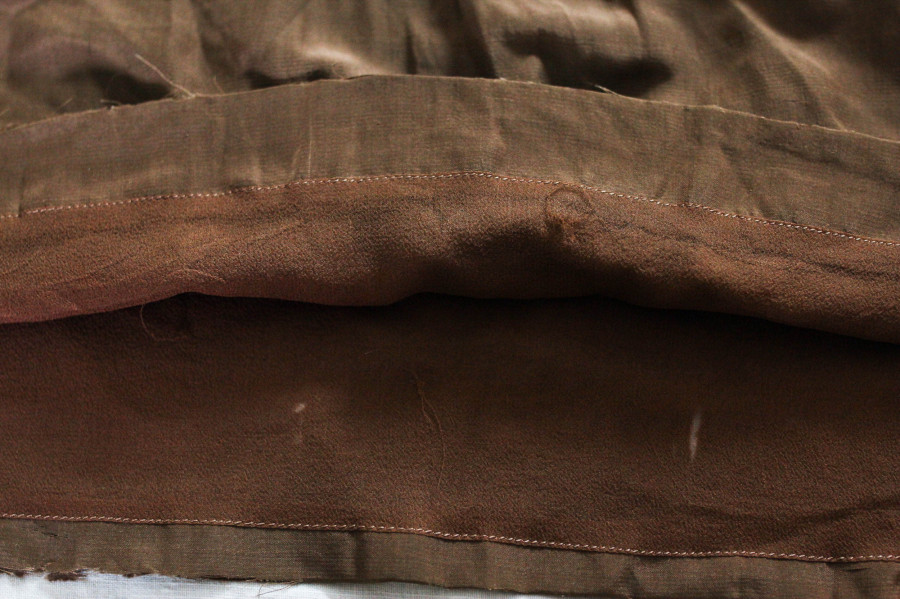
The hem is faced in chiffon.
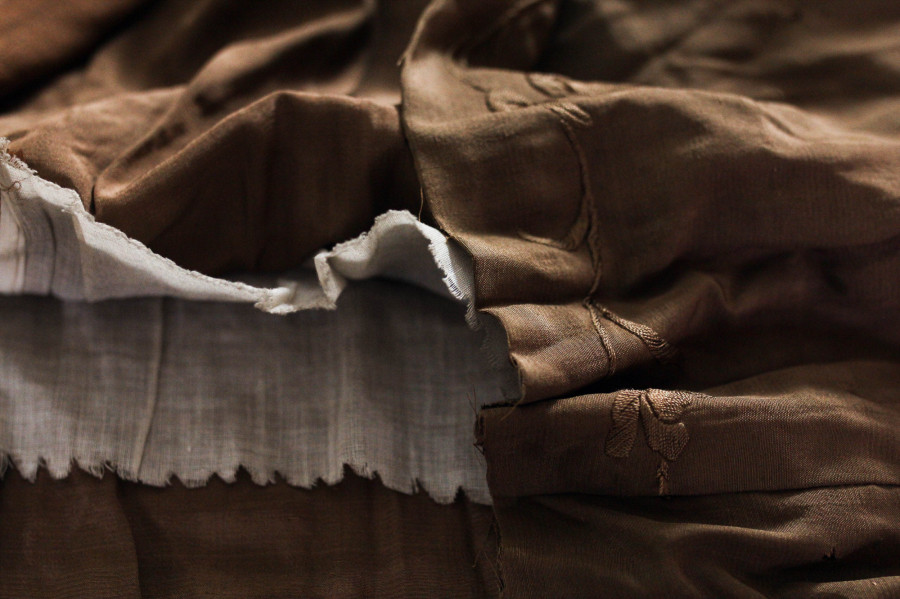
A sewn in unhemmed lining.
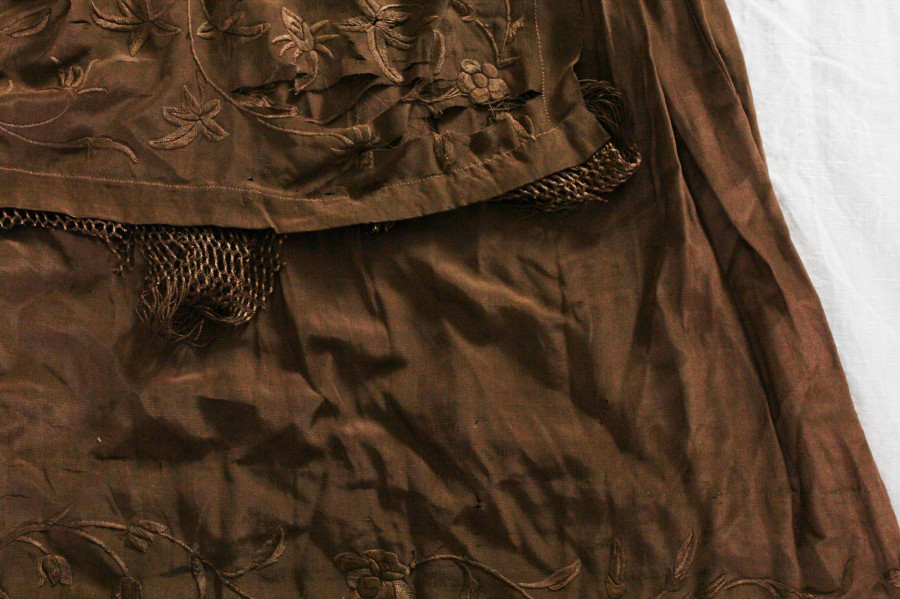
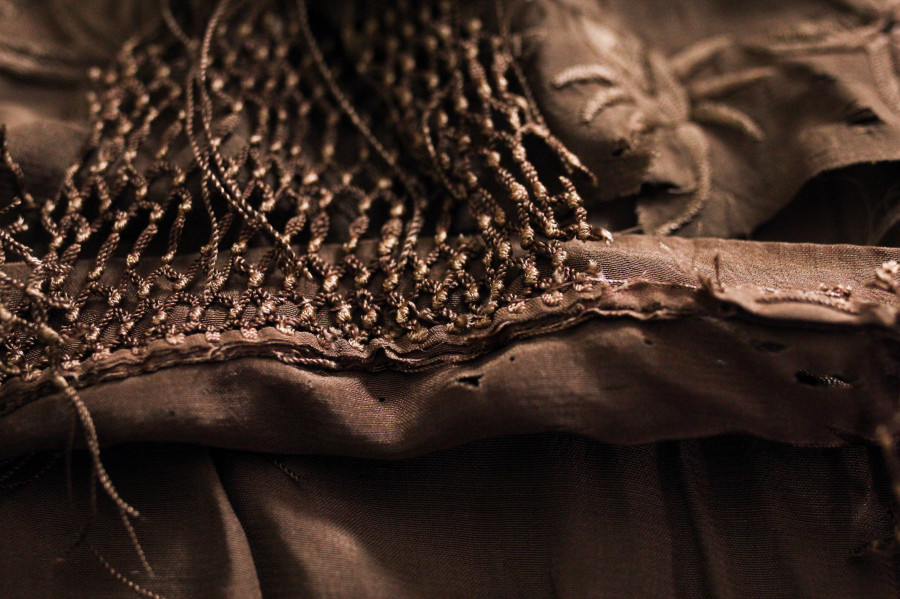
The fringe was carefully cut off the shawl with a small piece of silk to hold it together - then it was stitched to the dress.
You may also enjoy …
Dyeing socks with acorns
6 years ago
Natural gift wrap - autumn leaves
6 years ago
Studio Exclusive: Heather for Natural Dyeing: Golds and Greens
Learn how to dye with heather using traditional Scottish methods. Explore the history, colour potential, and step-by-step techniques to create golden yellow and olive tones from this native Highland plant.
1 year ago
Dye Plants: Coreopsis; Studio Club Private Blog
2 years ago
 RSS
RSS