Journal
Growing Dye Plants in Scotland: What Actually Works in my Heavy, Wet Soil
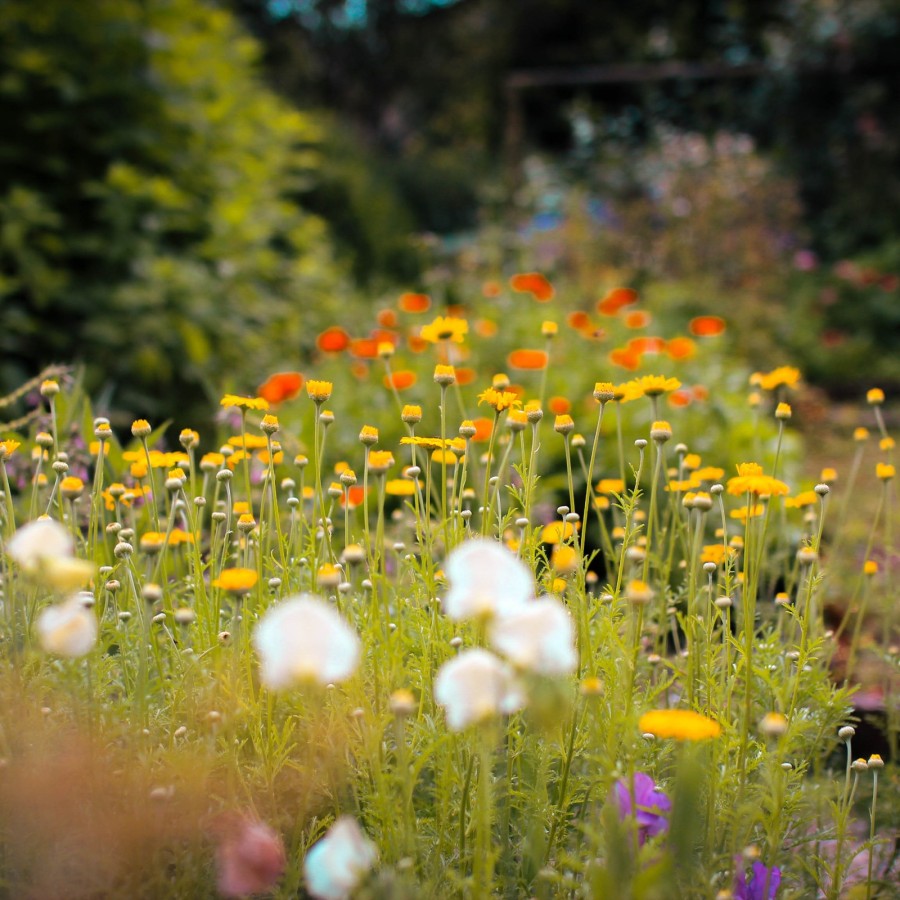
I grow my dye plants in rural Stirlingshire, about ten minutes from Loch Lomond. The soil is heavy, acidic and wet, particularly over winter. It’s almost exactly the wrong conditions for the traditional European dye plants. Weld wants light, alkaline soil. Madder and indigo can’t handle our winters. I can grow woad, but you need a lot of it to get a decent result. So rather than fighting my garden, I stopped trying. Instead, I started looking for plants that are happy here, things that thrive in heavy, wet ground and a Scottish climate. The colours I get aren’t the same as the ones from a traditional dye garden, and that’s become the point. They’re connected to this place. To this soil. That’s what excites me about them.
Here are six plants that grow well for me, the colours they give, and what you need to know if you want to try them yourself.
------------------------------------
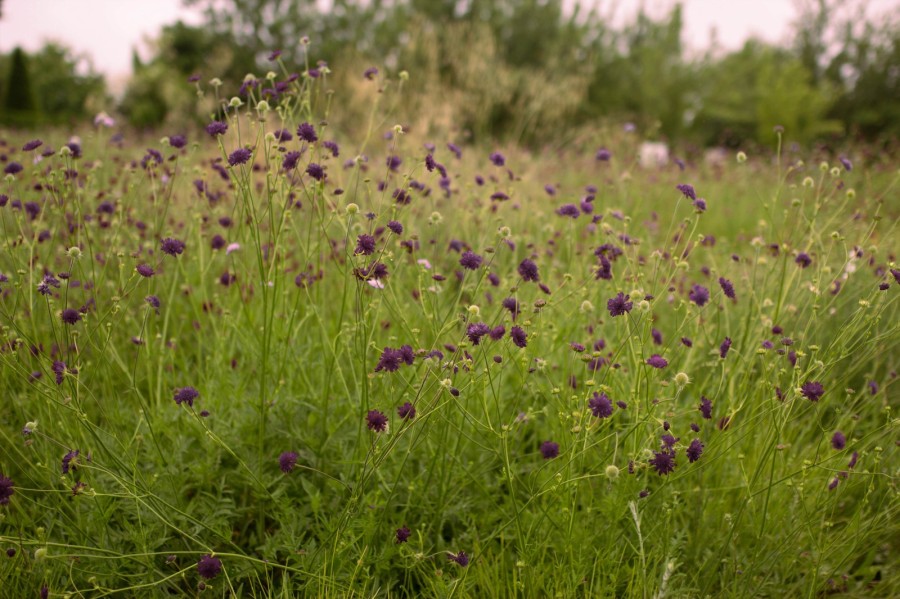
Scabious, Black Knight (Scabiosa atropurpurea) — Hardy annual:
Colour: Teal. pH sensitive, so can be shifted from cerise through to teal depending on acidity. The teal is stable. The pinks and cerises are not, and will shift back over time.
Lightfastness: Moderate to good. Better than its reputation suggests. Expect colours to hold well over years on items that aren’t being washed hard or left in direct sun.
Sow in late March or early April. Sow shallowly, as the seeds need light to germinate. By August the plants will be covered in small, very dark burgundy flowers, and they’ll keep producing them right through until the first frost, as long as you keep picking.
That last bit is important. Don’t plant more than you can harvest. These plants produce lots of flowers but if you let them go to seed, they stop. You will get more flowers from two or three well-picked plants than from a whole row where you’ve given up halfway through August. Pick regularly, and they just keep going.
The flowers dry well. Pick them and line them up on a windowsill. You don’t need to dye with them straight away. You can also use the petals for eco-printing and bundle dyeing, where they give small, dark navy-blue dots. The leaves are worth trying too, as they contain different compounds that actually print with better lightfastness than the flowers.
Fennel (Foeniculum vulgare) — Perennial herb
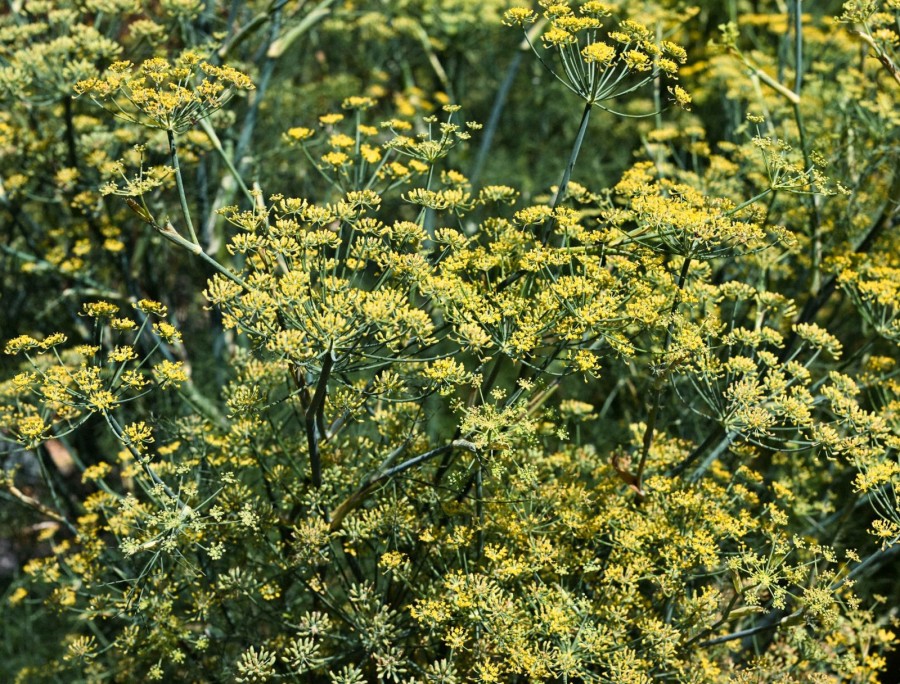
Colour: Yellow from the leaves. Green fennel gives a brighter yellow. Bronze fennel produces a more muted tone. It is a good alternative to weld if your soil is too heavy or acidic for it.
Lightfastness: Good.
You can sow fennel from seed or just buy a cheap plant from the herb section at a garden centre. Once it’s in, it’s perennial, so it will come back year after year.
If you’re wanting to pick it hard for dyeing, three plants is a good number. You use the leaves. I cut mine down to about an inch of growth in spring, let it regrow, and take further harvests through the season. You can dry the leaves if you don’t want to dye with them immediately, or freeze them, which holds the colour slightly better if you have the space.
One warning: do not let fennel go to seed unless you are very disciplined about harvesting those seeds for cooking. If you’re not, your whole garden will be full of fennel within a year or two.
It is a beautiful plant to work with in the dye pot. There’s a strong, warm aniseed scent to the whole process. A lot of highly scented plants give good dye, and fennel is no exception. If you’ve been missing weld as your reliable yellow, this is where I’d start.
------------------------------------
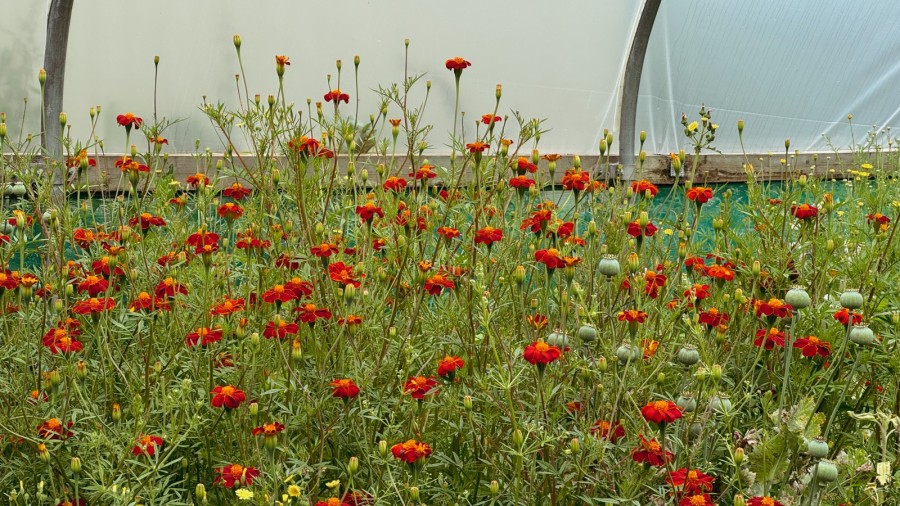
French marigold (Tagetes patula) — Half-hardy annual
Colour: Orangey yellow.
Lightfastness: Moderate to good.
You can grow these from seed, but it is much easier to buy them as bedding plants in May. The standard bedding varieties are short and dumpy with bright orange flowers, but since you’re going to be picking every flower, that doesn’t matter. If you have a polytunnel, try Tagetes patula ‘Burning Embers’, which is taller, a lovely plant, an old heirloom variety originally from the Linnaeus Gardens in Sweden. It will grow outside happily in warmer climates than Scotland, but here it needs the shelter of a tunnel.
You get a lot of dye from very few flowers. As with the scabious, the more you pick, the more flowers you’ll get. You can dry them or freeze them if you don’t want to dye with them straight away.
------------------------------------
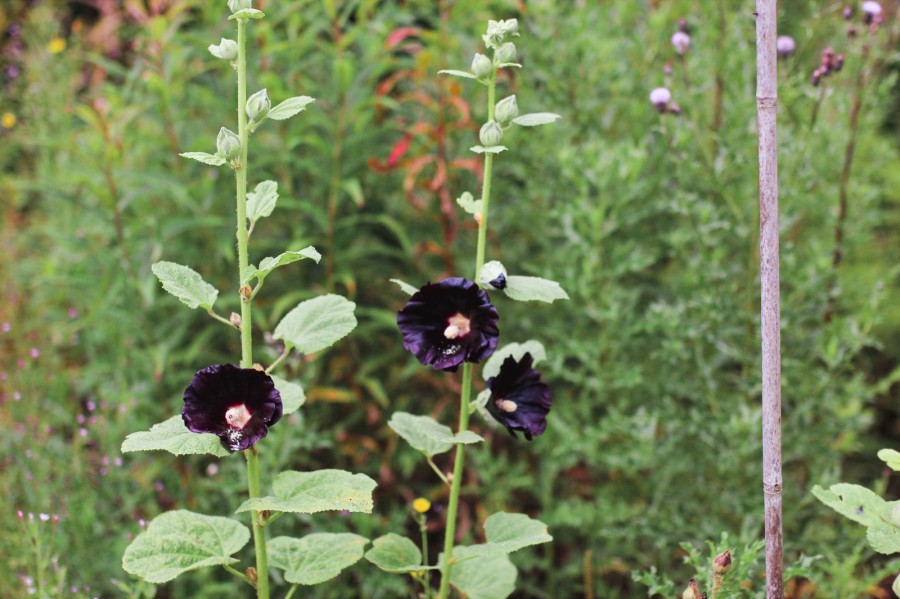
Black hollyhock (Alcea rosea ‘Nigra’) — Biennial / short-lived perennial
Colour: Blues. Deep, inky blues that fade down through the spectrum if you use the dye bath as an exhaust.
Lightfastness: Moderate, and better with iron.
I’ll be honest, this one struggles in my garden. Hollyhocks want well-drained soil and mine is neither well-drained nor neutral, so I don’t get the tall, dramatic plants that people in drier parts of the country manage. But I grow it anyway because the colour is hard to get any other way. If your soil is lighter or better drained than mine, you’ll have an easier time of it.
Sow in May and it will flower the following year. It’s often available as a plant if you’d rather not wait. The flowers are very easy to dry. Pick them and keep them in a paper bag.
I grow this for the blues. It is one of very few garden plants that will give you that colour range, and if you use the exhaust bath you can take it from a deep blue right down to the palest shade.
------------------------------------
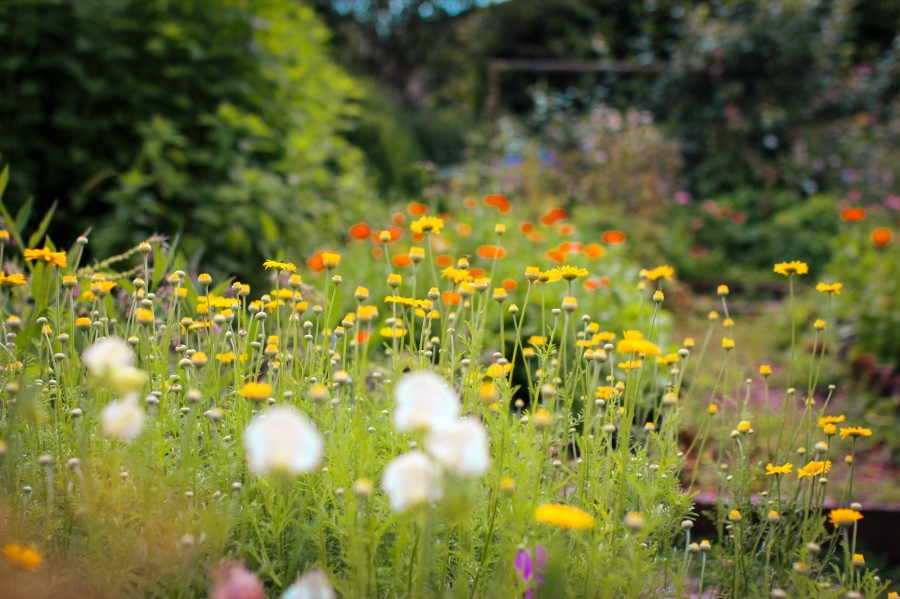
Dyer’s chamomile (Anthemis tinctoria) — Short-lived perennial
Colour: Bright mid-yellow. A warmer tone than fennel, without the sharpness. Reacts differently to iron modifiers, so it’s not a duplication.
Lightfastness: Good
This is one of the few traditional dye plants that will tolerate my garden, at least for a while. It’s happy for a couple of years and then the wet winters weaken it, but in that time it produces a ridiculous number of flowers. You can grow it from seed or pick it up as a plant.
It is a wonderful plant for bees and butterflies and also works as a cut flower so a win all round.
The flowers can be dried or frozen. The ferny leaves are also worth keeping, as they work really well in eco-printing.
------------------------------------
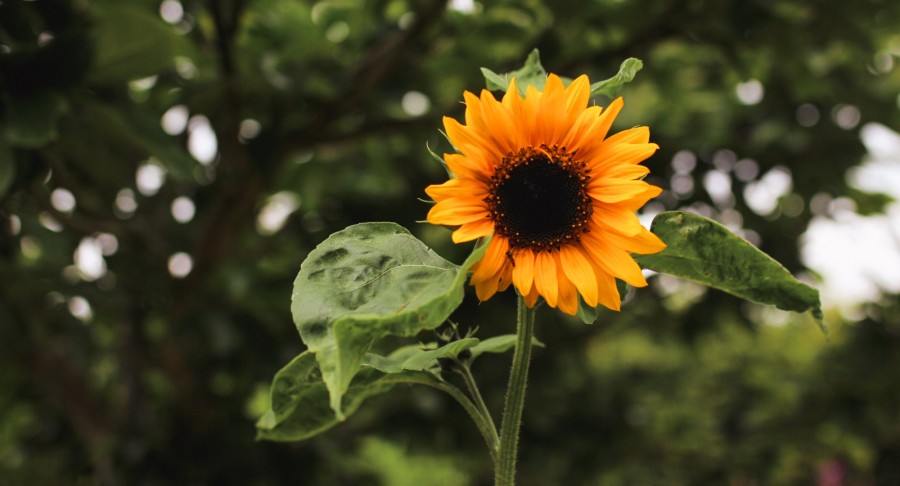
Hopi Black Dye sunflower (Helianthus annuus) — Annual
Colour: Purple. Ranges from lavender through to deep purple depending on concentration.
Lightfastness: Moderate. Best kept out of direct sunlight.
This is a traditional Hopi dye plant, bred and tended over generations for dyeing baskets and wool in what is now Arizona. The seeds were collected from the village of Shungopavi on the Hopi Reservation in 1978 as part of the Native Seeds/SEARCH project, and are now available from specialist dye seed suppliers.
Sow in April and plant out in the sunniest part of your garden. These will grow over six feet tall, so think about where you put them. Be prepared to stake them.
The dye comes from the seed hulls, not the seeds themselves, so you can in theory eat the seeds and dye with the hulls. Harvest the seed heads as soon as the seeds have darkened. Don’t leave them on the plant waiting for the very end of the season, because the heads will go mouldy and that will destroy them.
Growing it in Scotland is not the same as growing it in Arizona. The seeds won’t mature to the deep black they would in a hotter, drier climate, and the purple you get will be gentler than what American growers report. But it does give a purple, and purple is hard to come by in the dye garden. Treat the dye gently. It is anthocyanin-based, like the scabious, which means it doesn’t respond well to heat. Steep the hulls rather than simmering them, and you’ll keep the colour.
The flowers are beautiful in the garden and the bees love them. Store the hulls somewhere dry for winter dyeing.
You’ll notice that most of these plants give me bright yellows, blues and purples. That’s deliberate. I don’t need to grow plants for the greeny yellows and tans, because I can get those from what’s already around me or growing at the edges of my garden: bracken, sweet cicely, gorse, nettles, dock. My dye garden is for the colours I can’t forage. If you have a polytunnel, you can push this further. I grow madder in mine, which won’t survive a Scottish winter outside, along with Japanese indigo in small amounts for fresh dyeing and cosmos sulphureus for a bright orange. But the six plants above are all outdoor plants that will cope with heavy, wet, acidic soil and still give you a range of colour that’s genuinely useful.
You may also enjoy …
How to grow sweet peas from seed
How to grow sweet peas from seed in UK
3 years ago
Studio Exclusive: Dyeing with Hollyhock, true blues
Discover how black hollyhock flowers create stunning natural blue dyes - a simple alternative to indigo that works beautifully for small-scale projects. Easy growing and dyeing tips included.
7 months ago
When the garden tips into chaos
A gentle reflection on midsummer abundance, creative mess, and choosing joy in a garden that’s tipped into wild, beautiful chaos.
7 months ago
Making a jam jar 'terrarium' of crocus
Make your own terrarium of crocus
6 years ago
 RSS
RSS