Journal
A New Series: Dyeing with Plants
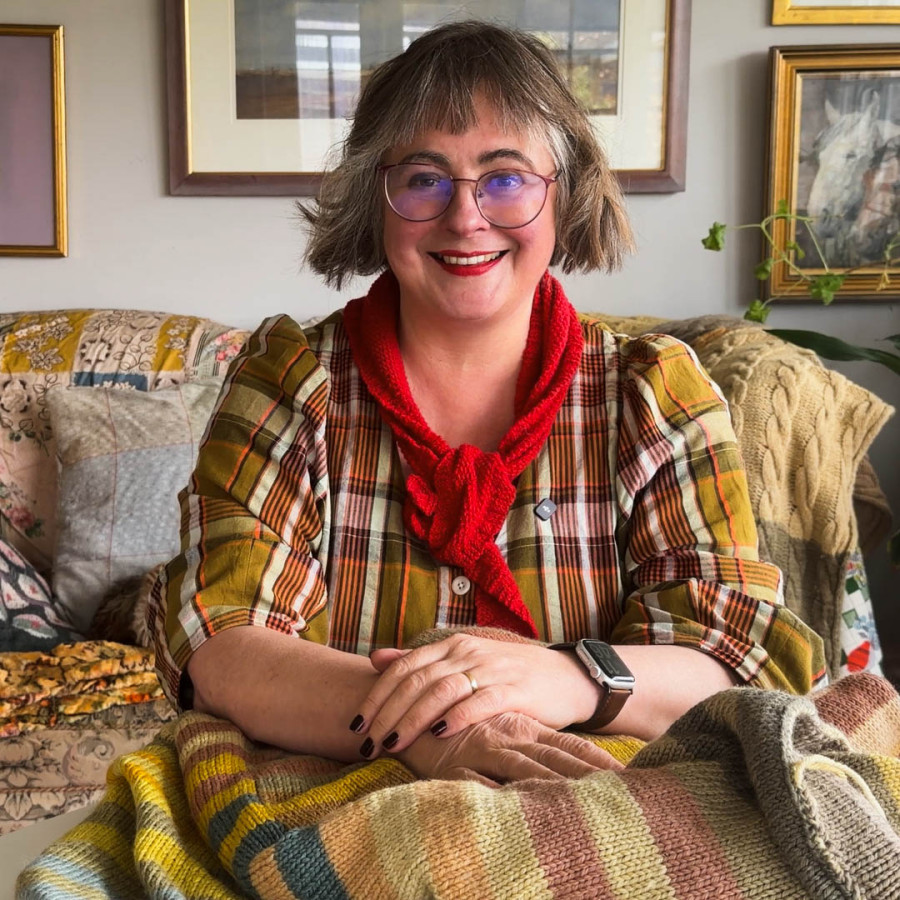
In 2000, I left my job as an art gallery curator, retrained in horticulture, and set up a cut flower business. I grew everything myself - every stem for every wedding, every bouquet sent by post, everything arranged for every event came from this garden in Stirlingshire.
There was one exception. A bride wanted roses at a time when I had none, and we compromised on English-grown ones. Two days before the wedding I got a call to say they’d actually be coming from Kenya. They arrived smelling of chemicals, stiff as sticks, wrong in every possible way against everything else in the arrangement. I never ordered anyone else’s flowers again.
That stubbornness is still here. It’s now just pointed at a dye pot.
What this series is
This is a series about botanical dyeing - specifically about what’s in my dye bath that week. Not a syllabus, not a planned curriculum. I’ll film what’s ready, what’s at its peak, and that’s what we’ll work with. If something is past its best when I get to filming, it waits for next year.
I am plant first, colour second. Most dyeing content starts from the colour you want and works backwards. I work the other way - I look at what’s there, what’s abundant, what’s ready, and I put it in the pot. The colour is what comes.
How I learned, and what I found out about my soil
I learned to dye with Debbie Bamford - the Mulberry Dyer, and a world expert on madder. After that first course, I dabbled for a few years, picking it up and putting it down. It wasn’t until I decided to make a jumper dyed entirely from garden plants that I became properly hooked.
That jumper now belongs to my elder daughter, who wears it a lot. It’s held up well.
I started building a dye garden, and fairly quickly discovered that you couldn’t get much worse conditions for one. We’re acidic, wet, and claggy. Most of the traditional dye plants - weld, madder, indigo - either failed completely or sulked. Dyer’s chamomile does two years here and then gives up. Other people complain it takes over their gardens.
So I did what anyone does when the textbook doesn’t apply: I ignored the textbook. I started thinking like someone who is outside the guild system entirely, way back in time, just looking around at what’s there and giving things a go. And as you can see from this blanket, there’s plenty of colour to be had.
(I do have some madder growing in the polytunnel. It won’t survive outside in my conditions, but I’m hopeful the tunnel will protect it. It takes four years to reach harvestable size, so this is a slow experiment. If it works, it will add orangey reds that I can’t currently get here.)
On taking plants
I don’t forage rare things. Everything I use is either grown here as a deliberate crop, or it’s what I’d call borderline invasive - the kind of plant where, if a thousand people came picking, there would still be plenty of it left. Nettles, docks, bracken. Plants that give without any worry.
What I won’t do is hunt something down because it gives a particular colour if you dig up the root. Roots aren’t forageable. And beyond that, there are so many colours that are just freely given by abundant plants - chasing a pink or a teal from something uncommon is unnecessary, and it’s also a way of exploiting what we’re supposed to be working with.
Resist the novelty. Rein it back. See what you actually have.
What the colours look like
The blanket I’m working on at the moment was started during lockdown. Mini skeins, each stripe a different plant, double-sided, knitted in strips. It’s almost finished - one more stripe to go this year. The colours have surprised me repeatedly. Things I expected to give very little gave a lot. The palette is much wider than people assume when they think about local, foraged dyeing.
The threads on the studio table - dyed embroidery threads from garden and local plants - are what years of this practice produces. There’s a full rainbow in them. No sense of making do, no muted compromise. These are threads worth stitching with, and worth selling.
That’s what plant-first dyeing looks like here, in this particular piece of Stirlingshire, on this particular soil.
What you’ll get from this series
Each film will be about one plant or group of plants - what they are, where I find them, how I use them, and what to expect in terms of colour. Because many of these plants have grown in Scotland for a very long time, there’s often history and folk use attached to them too, and I’ll bring that in where it’s interesting.
If you’re watching from somewhere with different soil, different climate, different plants - some of what I use won’t work for you. That’s fine. The point isn’t to follow my exact plants. It’s to find what’s abundant where you are, and start there.
You may also enjoy …
Dye Plants; Indigo: Studio Club Private Blog
2 years ago
Making a rose lip balm
make a rose lip balm
5 years ago
Making a jam jar 'terrarium' of crocus
Make your own terrarium of crocus
6 years ago
Tour of the Studio and Meadow
4 years ago
 RSS
RSS