Journal
You Are Creative (Even If You Think You Can’t Draw)
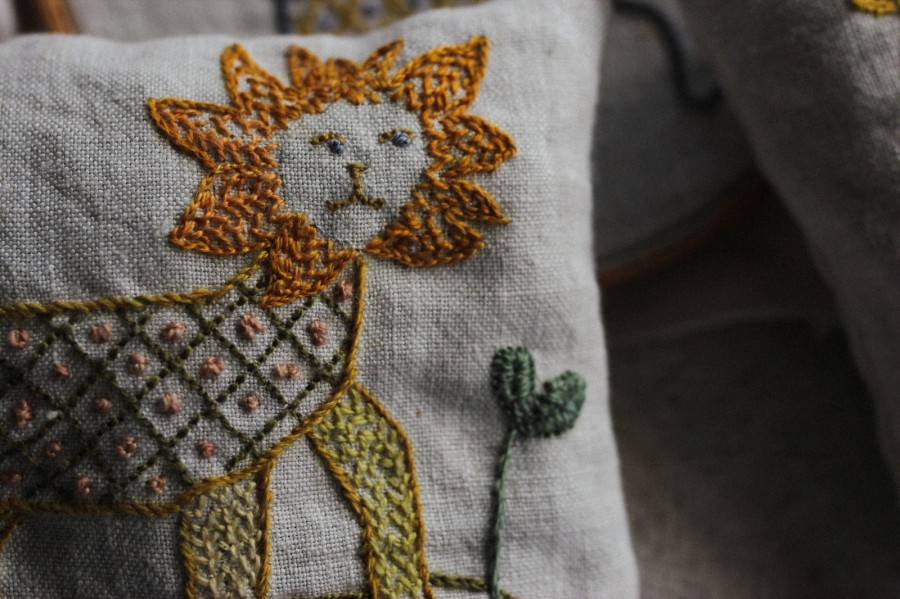
One of the things that comes up a lot when people join The Studio is “I’m not actually very creative” or “I can’t draw.”
I understand that completely. I wasn’t allowed to continue with art past primary school because I was deemed not good at it. I didn’t pick up a pencil again until I was 45. Even when I was spending hours doing freehand machine embroidery—literally drawing with a sewing machine—I still told people “I can’t draw.”
But looking at historical embroidery over the past year has shown me that what I believed about creativity just isn’t true.
The coverlet that changed my thinking
There’s a coverlet in the V&A collection I’ve been studying. About eight feet long, embroidered onto linen with silk and silver thread, probably made around 1610-1620.
Two things are obvious when you look closely. First, it’s unfinished—you can still see the pen and ink lines that were meant to be covered with stitching. Despite all the expensive gold thread work, whoever made it never quite finished.
Second, there are several of the same animal scattered across it. Several lions. Several porcupines. Several hares. All similar but slightly different—one a bit wonkier, the spacing varies.
They weren’t drawn freehand. They were copied.
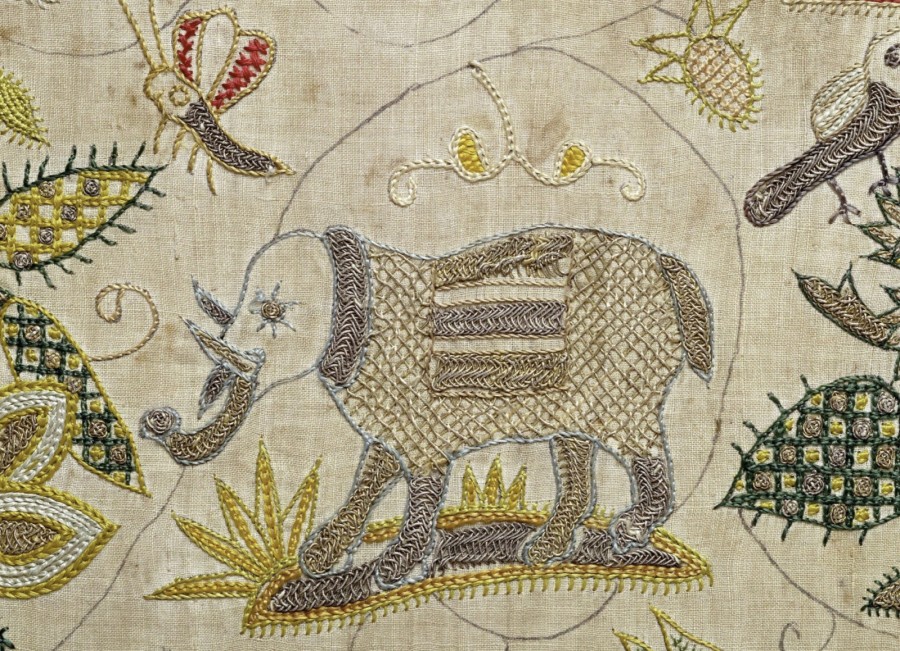
How they actually worked
Embroiderers would take printed woodcuts and use pricking and pouncing. You’d prick holes along the lines with a needle, then use powdered charcoal to pounce through onto fabric. That gave you a dotted outline to draw between.
You could use the same pattern multiple times—several lions, several elephants. But because you moved the paper slightly, or your hand wavered, each one came out a bit different.
There were also professional designers who would draw complete designs onto linen, fill them in with watercolour, and sell them. Early embroidery kits. You didn’t have to invent anything yourself.
The wonkiness is part of it
This museum piece was probably copied from printed sources, repeated using the same pattern, slightly wonky. And it’s lovely. The differences between each animal give it life.
I’ve been copying these animal designs onto linen and embroidering them with plant-dyed wool. They’re wonky. The lions don’t match. And they feel connected to something old but also completely mine.
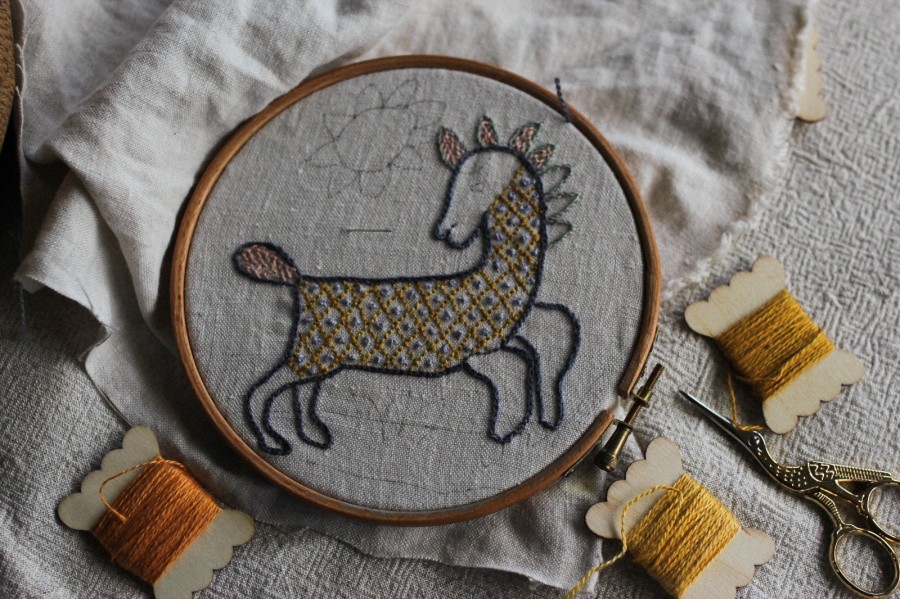
What I’m realising
I’d assumed that being creative meant inventing completely original designs from nothing. No copying. No tracing. No help.
But that’s not how people actually worked. Elizabethan embroiderers used woodcut patterns. Winifred Nicholson copied designs from postcards for her rag rugs. People worked from sources. Their versions came out different because their hands moved differently, but they started by looking at something that already existed.
In The Studio now, we’re making embroidered linen bags using traditional smocking patterns and Elizabethan animal designs. Nobody’s inventing from nothing. We’re looking at historical patterns and making our own versions.
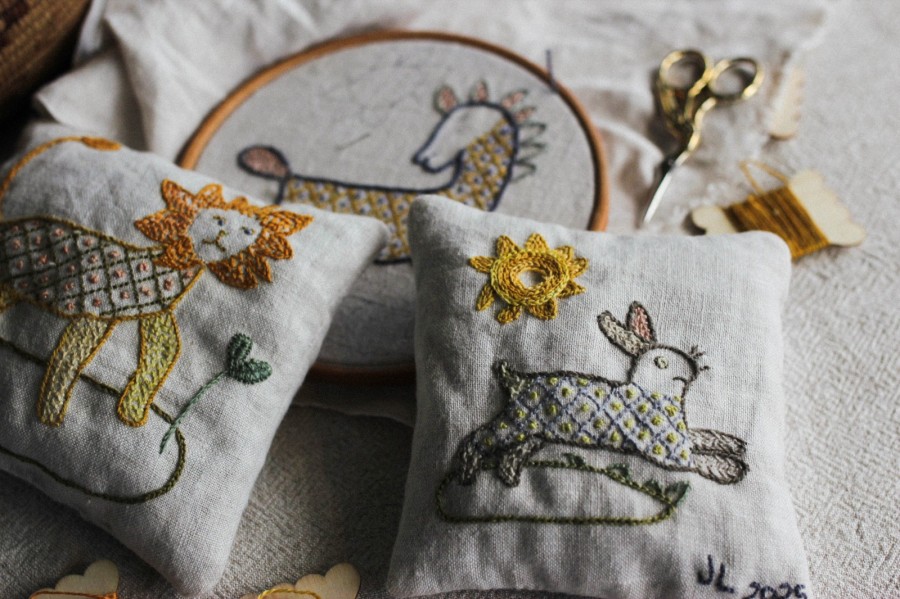
The video above goes into more detail about the coverlet and these techniques.
If this sounds familiar
If you’ve been telling yourself you’re not creative, try copying something. Trace it. Use transfer paper. Your version will come out wonky. The museum pieces are wonky too. That’s part of what makes them beautiful.
Join The Studio if you’d like a space to try this with others discovering they’re more creative than they thought.
You may also enjoy …
Just a little posy of flowers . .
making tiny flower arrangements for bedside tables, weddings and guest bedrooms.
7 years ago
Pickled garlic scape recipe
recipe for pickled garlic scape
3 years ago
Buttercups as cut flowers
Using buttercups as cut flowers
3 years ago
Why There’s a Photograph of My 20-Year-Old Self in My Journal
Everyone says look back to age seven. But I found something more useful in a photograph of my 20-year-old self, before life dulled the fire down.
3 weeks ago
 RSS
RSS