Journal
The Truth About Women’s Pockets (And Why We’re Not Victims)
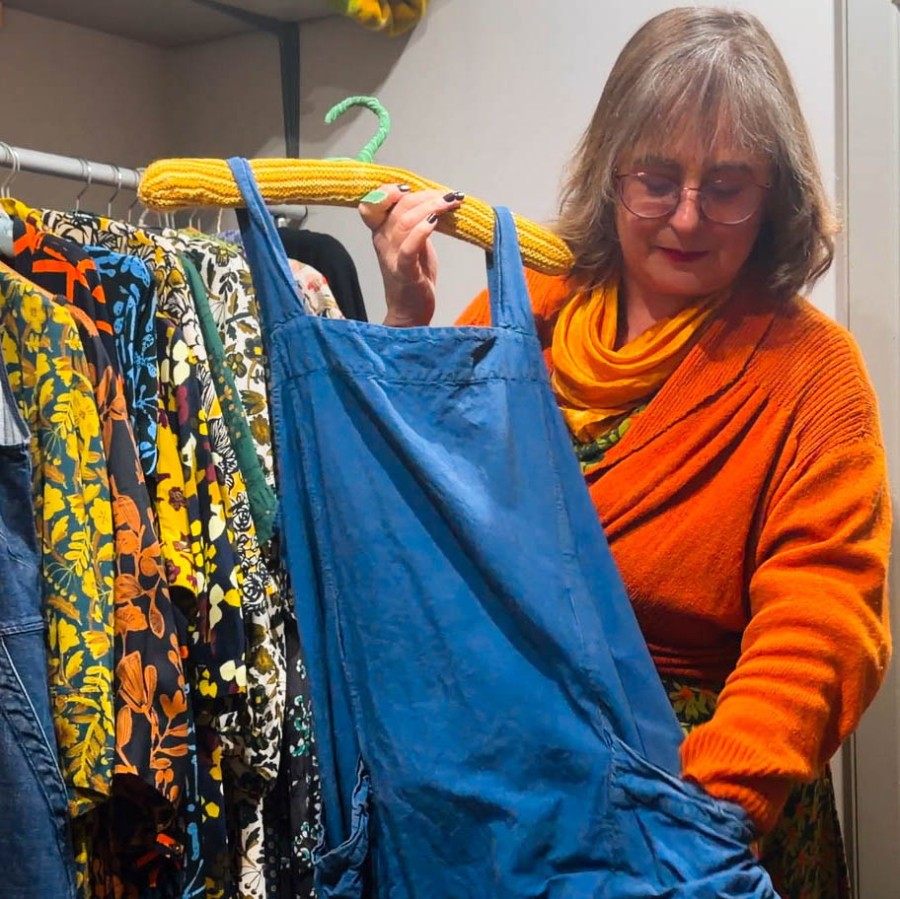
Over the past few years, I’ve seen countless posts declaring that having pockets is some kind of feminist triumph, or that patriarchy stole our pockets. It’s become one of those narratives that gets repeated so often we forget to question it. But when I look at the historical evidence – including the vintage clothing that’s passed through my own hands – something doesn’t add up.
The reality is that from the 1830s through the 1950s, the vast majority of women’s day clothes had excellent pockets. Not token pockets. Proper, functional pockets that could hold books, letters, sewing, notebooks – everything women needed for their daily lives. I know this because I’ve collected and studied vintage costume for decades, and I’ve put my hands in those pockets.
So what actually happened? And more importantly, why does this matter?
In this week’s film, I walk through the actual history of women’s pockets, starting with my own wardrobe. I show you an 1850s silk evening dress with substantial side-seam pockets. I explain how tie-on pockets worked from medieval times through the mid-19th century, and why they were such important private spaces for women who had very little privacy otherwise. I trace the changes through empire-line dresses (when pockets moved outside as reticules), the return of full skirts with their generous pockets, and the shift that happened in the 1970s with fast fashion.
Because that’s what actually took our pockets: not some conspiracy, but our collective participation in fast fashion. When we vote with our wallets for cheaper and cheaper clothing, manufacturers cut every corner to meet that demand. Quality drops. Hems disappear. And pockets go. Meanwhile, men – who generally spend more per item but buy fewer things – retained their pockets.
The clamour for pockets only really started in the 2010s, when smartphones became essential daily tools. Suddenly we all needed somewhere to put these larger devices that contained our photos, emails, music, and navigation. And women without pockets in their clothes noticed the problem.
Here’s why this matters beyond fashion history: when we frame this as “patriarchy stole our pockets,” we make ourselves victims without agency. Having pockets is nice. We should absolutely use our spending power to demand them in the day clothes that need them. But it isn’t the ultimate feminist action, and believing there’s a conspiracy against us actually robs us of our power.
Women throughout history made pockets when they needed them. They strapped them on. They incorporated them into their garments. They solved practical problems with practical solutions. That’s the thread we should be picking up – not victimhood, but agency. Spending our money where it makes a difference. Rejecting fast fashion. Keeping clothes longer. Mending them. Teaching ourselves and each other to make things.
And yes, carrying our pamphlets in our pockets.
 RSS
RSS