Journal
My Garden in May: Why Looking at Nature Changes How You Feel
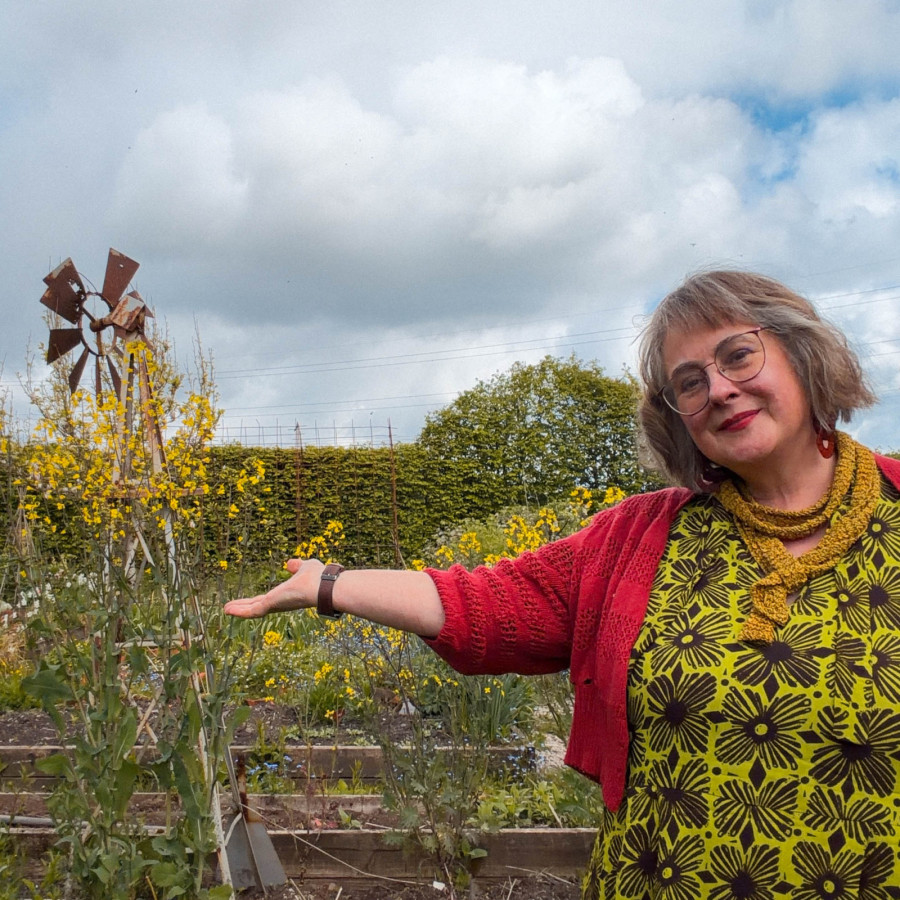
In 1984, a researcher called Roger Ulrich published a study in Science that was, at the time, quietly remarkable. He looked at the medical records of patients recovering from gallbladder surgery at a hospital in Pennsylvania. Some of them had rooms with windows facing trees. Others had rooms with windows facing a brick wall. That was the only difference.
The patients with tree views recovered, on average, a day faster than those looking at the wall. They needed fewer painkillers. They had fewer post-surgical complications.
A view of trees was the only change.
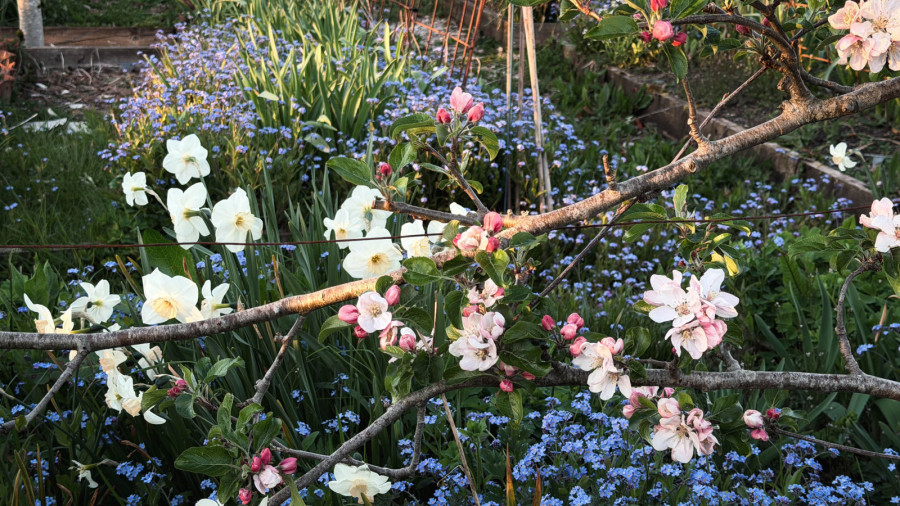
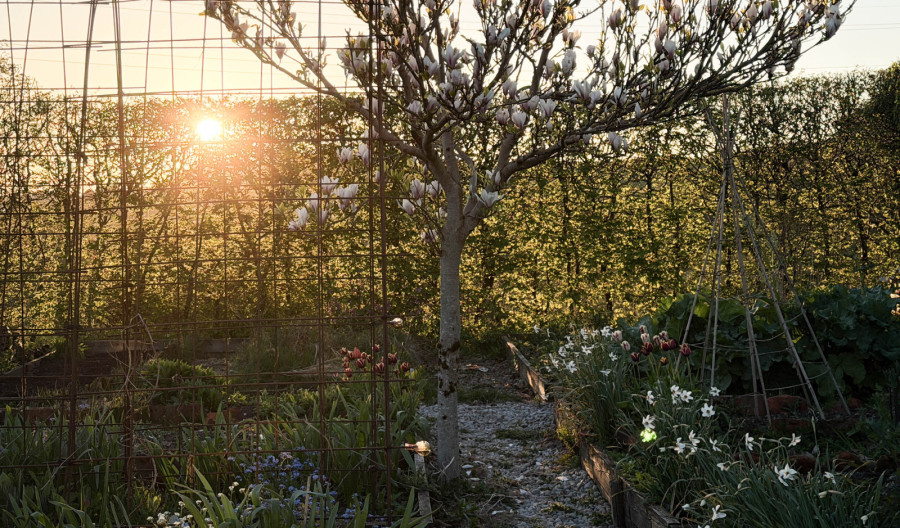
In this week’s film I take you round my garden in May — no thriller music, no manufactured peril, just the birds and the magnolia and some thoughts on all of the above.
What the research actually shows
Ulrich’s study opened a door. Subsequent researchers working independently have reproduced the main findings, and there is now quite an active area of medical research using nature as a way to reduce pain.
The burn care research is particularly striking. Studies have looked at what happens when patients having dressings changed on burns are shown nature images or natural soundscapes during the procedure. Patients exposed to nature views and sounds reported significantly higher levels of perceived control over pain. Not absence of pain. Control over it. That’s a different and arguably more interesting finding.
More recent research using brain imaging has found that acute pain was rated as less intense and unpleasant when participants watched nature videos, alongside a measurable reduction in brain activity associated with pain. This shows up in the brain in imaging, it isn’t just a disctraction.
Why this might be
There are a few theories. The most plausible draws on evolutionary biology. We are animals who spent the vast majority of our existence outdoors, in landscapes we needed to read accurately to survive. Green, growing things meant water, food, shelter. Our nervous systems learned to relax in their presence. That response hasn’t been bred out of us in a few generations of indoor living.
Rachel and Stephen Kaplan, psychologists at the University of Michigan, described this in their Attention Restoration Theory in the 1980s and 90s. The argument is that directed attention; the kind we use for work, decisions, screens, depletes. Nature restores it, because looking at natural environments uses what they called fascination: effortless, soft attention that doesn’t drain us the way focused work does. Watching clouds. Following a bird. Looking at a tree moving in wind.
We are not doing anything when we do this. And that is precisely the point.
I watched a nature programme recently that left me more wrung out than replenished. The music sounded as though it was written for a thriller. The editing was rapid. Peril was manufactured in places where the original footage, I suspect, contained none.
I came away from it genuinely stressed.
This is worth noticing. Because the research suggests that what our nervous systems need from contact with the natural world is something quite specific: soft attention, low threat, no urgency. The opposite of everything that programme was designed to provide.
The production values that make nature television exciting to commission and watch may be working directly against the thing that makes nature valuable to us in the first place.
So that is why there is a tour of my garden in this week’s video!
Sources
Roger S. Ulrich, “View Through a Window May Influence Recovery from Surgery,” Science, Vol. 224, No. 4647, 27 April 1984, pp. 420–421. https://doi.org/10.1126/science.6143402
Rachel and Stephen Kaplan, The Experience of Nature: A Psychological Perspective, Cambridge University Press, 1989.
Kaplan, S. (1995), “The Restorative Benefits of Nature: Toward an Integrative Framework,” Journal of Environmental Psychology, 15(3), pp. 169–182.
Miller, A.C., Hickman, L.C., & Lemasters, G.K. (1992), “A distraction technique for control of burn pain,” Journal of Burn Care & Rehabilitation, 13, pp. 576–580.
“Nature relieves physical pain: pain-related signals in the brain are reduced,” ScienceDaily, 13 March 2025. https://www.sciencedaily.com/releases/2025/03/250313130758.htm
You may also enjoy …
Nant y Bedd Garden, Brecon Beacons
Garden at Nant y Bedd in Brecon Beacons
4 years ago
A Remarkable Textile Exhibition in Paris (On Until July 2026)
I visited a Paris textile exhibition featuring 36 artists working with needlepoint, collage, tapestry and more. Here are the three that stopped me, and why their work matters.
6 months ago
Vintage linens in Naples
Shopping for vintage textiles in Naples, Italy
7 months ago
A Return to Galloway: Place, Self, and Creative Threads
A reflective journey through Galloway, Scotland—exploring creativity, place, and personal growth. From art archives to ancient landscapes, discover what it means to return and re-see.
1 year ago
 RSS
RSS