Journal
Crewel work fragment from Jacobean Bed hangings: What You Can Still See After 400 Years
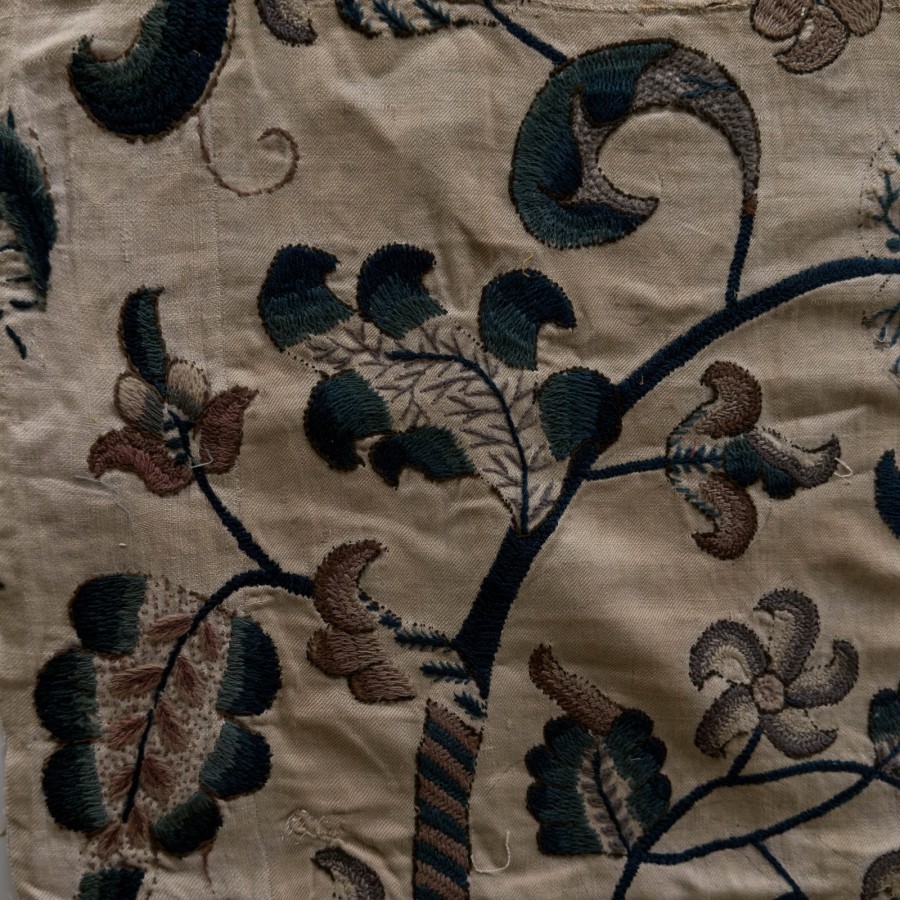
A couple of months ago I bought this piece of embroidery as a study piece for The Studio. It’s a fragment of what was once a bed curtain, designed for privacy and warmth in a cold English manor house. About forty centimetres square, embroidered in crewelwork – plant-dyed wool on a linen (or possibly linen-cotton) twill. It dates from around 1610 to 1620.
The design is the Tree of Life, newly popular at the time as more and more designs from India reached England via the East India Company, founded in 1600. The curving branches and scrolling leaves you can see here would have extended from the bottom of the curtain right to the top. The ground may have had plants and animals amongst the trunks.
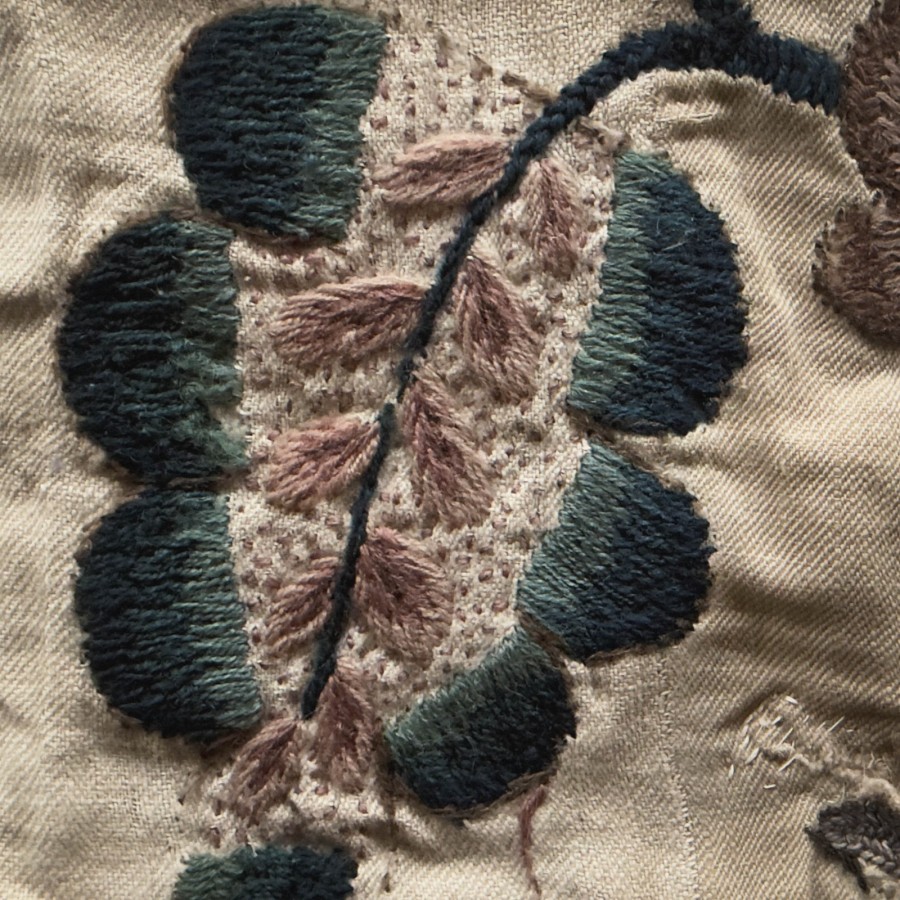
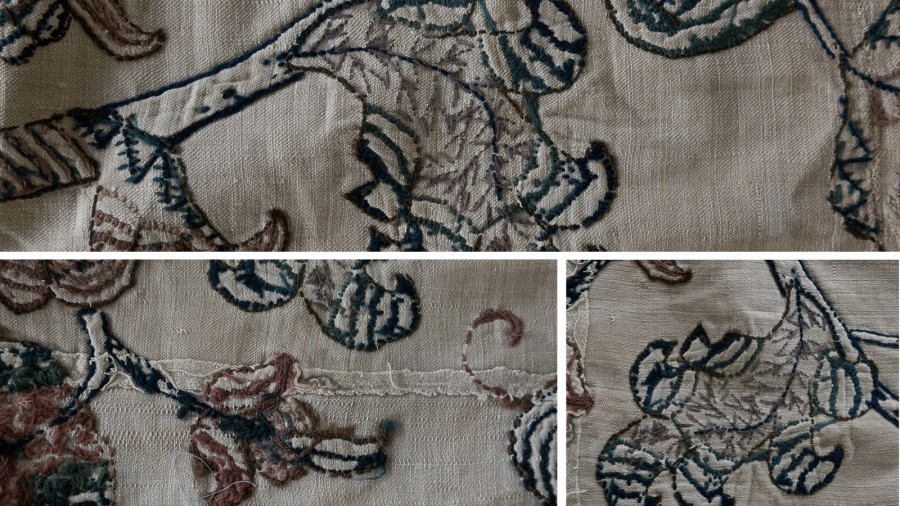
Because this is a fragment, a study piece, we can see the back – and this is where it gets interesting. The back would have been out of direct light, protected by the folds of the curtain. The threads haven’t faded much. The indigo blues are the same front and back. The browns too. The only colour change is from a deep pinky fawn to something paler.
That tells you which dyes lasted and which didn’t. Indigo – imported from India by the early 1600s – doesn’t fade. The browns, likely from oak bark or walnut hulls, held their colour. But that pinky fawn has shifted, lost its intensity where light could reach it.
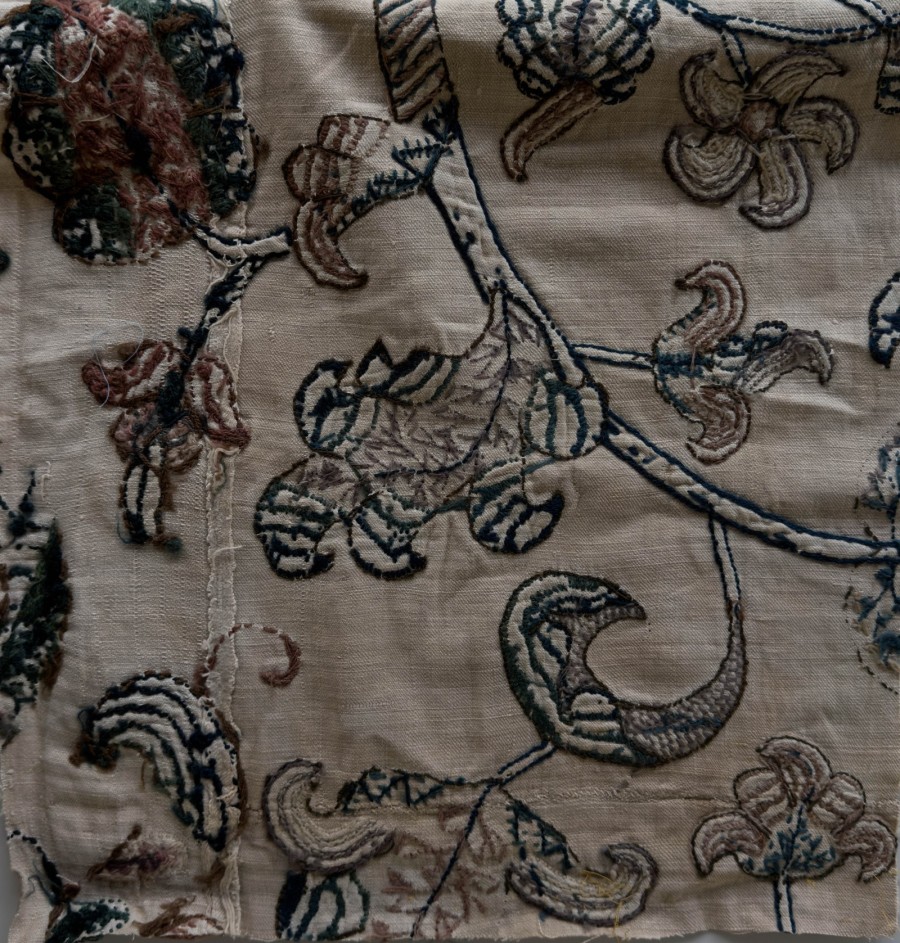
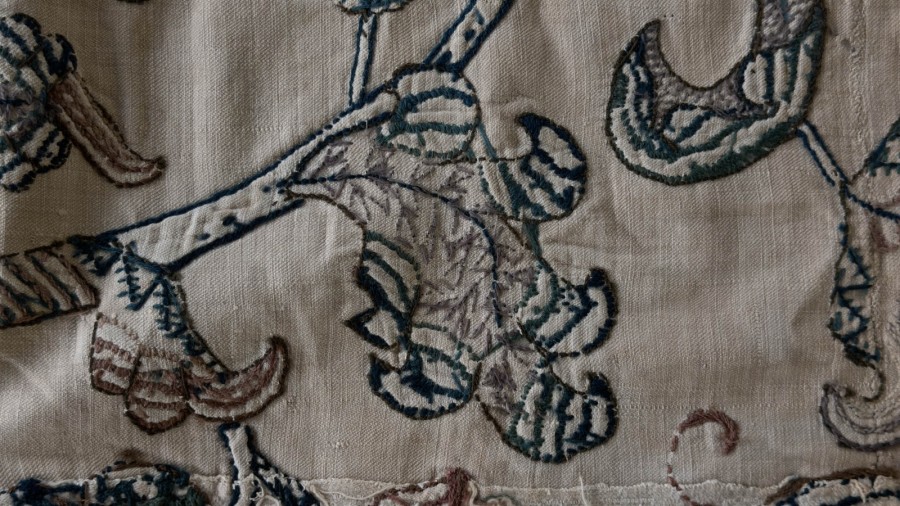
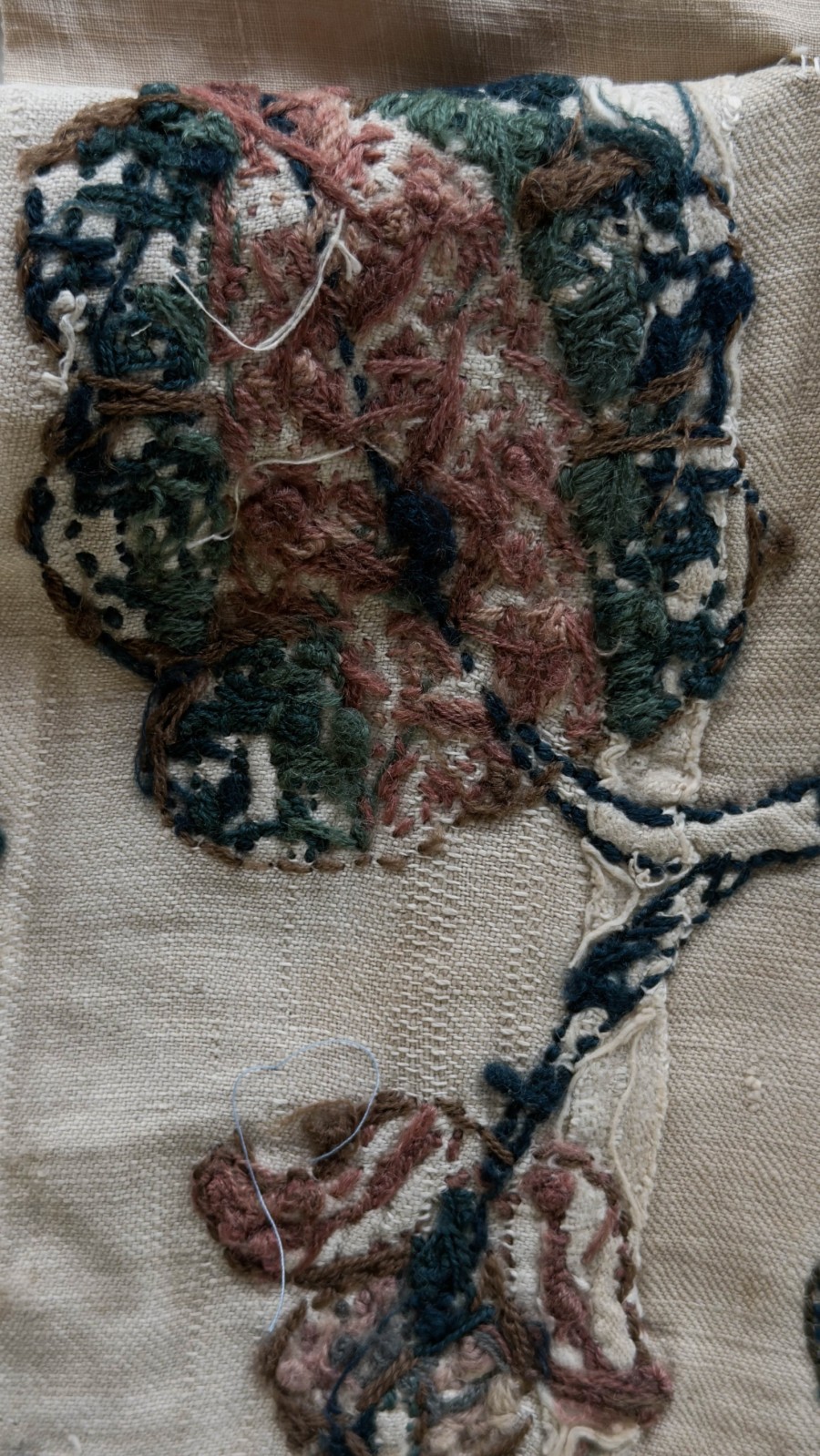
The design was drawn onto the seamed linen. You can see the uncovered lines in some of the photos – places where the embroiderer didn’t quite cover the guide marks. Perhaps it was drawn freehand by the maker, or by a professional embroidery designer. Or perhaps it came from prick and pounce – a large-scale master drawing, the lines perforated with needle dots, fine charcoal or dried cuttlefish ink forced through the holes onto the fabric below.
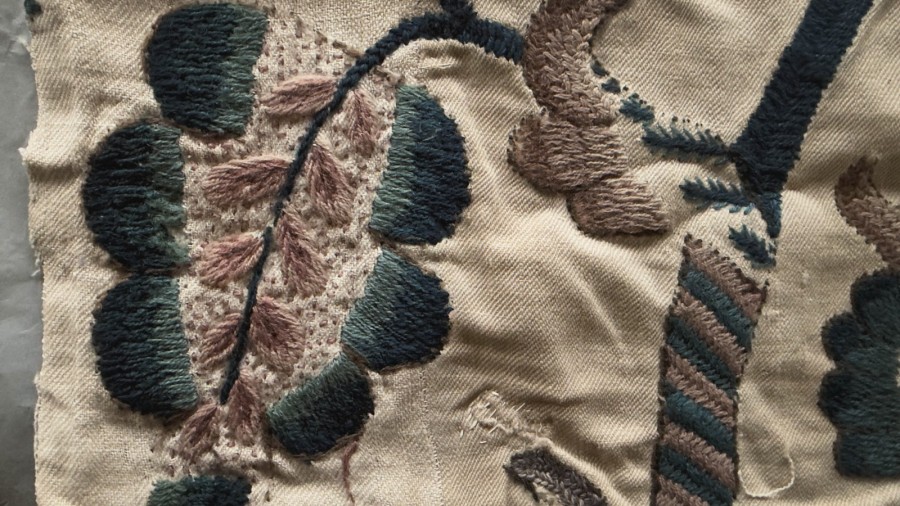
The embroidery was probably done by the women of the household, though professional embroiderers did exist. A full set of bed hangings, creating a room within a room, would have taken up to fifty yards of fabric. It was likely a project worked on by many hands.
Bed hangings weren’t decorative extras. They were essential household equipment. When pulled closed around a bed, they gave warmth and privacy in houses without central heating, in rooms where multiple people slept. Even wealthy households had servants sleeping in the same rooms as their employers. The hangings were often worth more than the wooden bed frame they decorated.
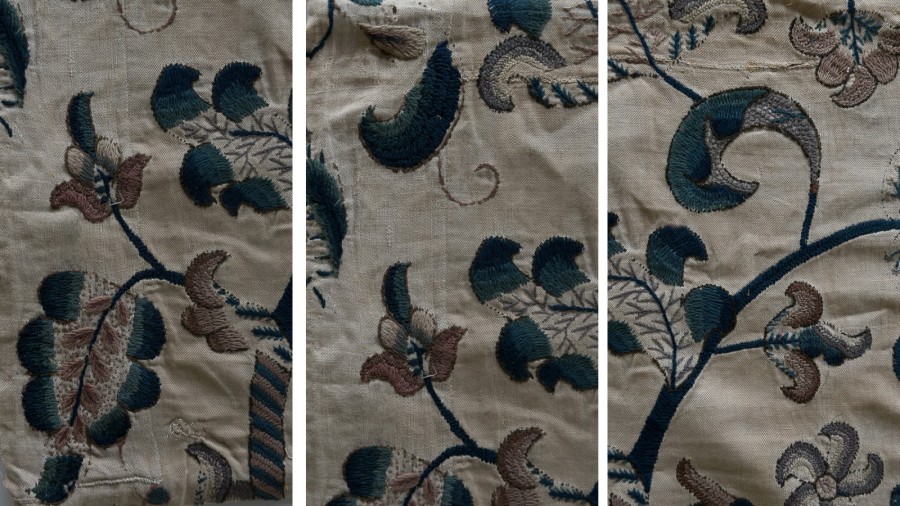
What remains in this fragment: the blues that lasted, the fawn that faded, the visible design lines someone drew four hundred years ago, the way stitches follow curves and fill shapes, the seam where two pieces of linen were joined to make fabric wide enough for a bed curtain.
And at the back, protected from light all these years, something close to the original colours.
Looking closely at pieces like this is what we do in The Studio – investigating how things were made, working with traditional techniques, making with intention. More about The Studio here.
You may also enjoy …
Un-paper towels tutorial
making your own kitchen towel alternative tutorial
6 years ago
Plantain and nettle balm
Plantago lanceolata history and use, ribwort plantain, balm recipe
5 years ago
Wrapping with tiny dogwood hoops
ideas for sustainable foraged gift wrap and table decorations
4 years ago
Eco printing on paper with Elisabeth Viguie Culshaw
eco print course in Scotland eco printing with garden plants
3 years ago
 RSS
RSS