Journal
The Guilt of Unfinished Projects (And Why You Should Question It)
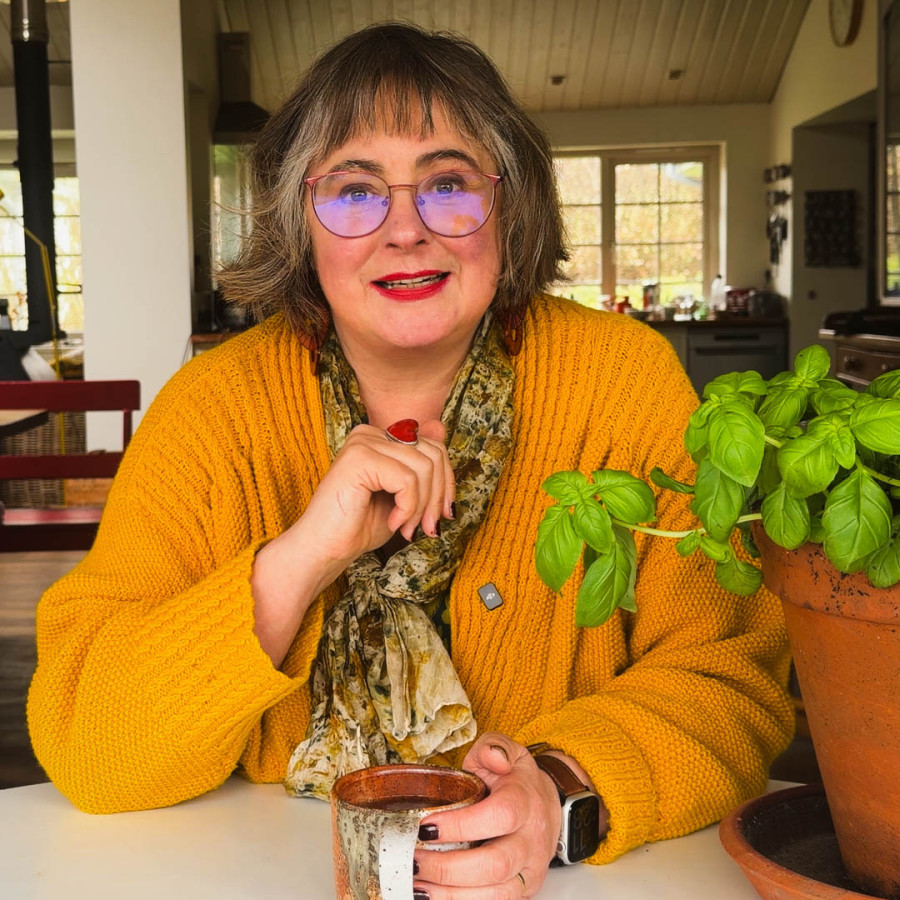
For most of my working life I have run small businesses on my own. That means I have been my own marketing department, my own finance department, and my own research and development department.
Research and development is the part that keeps a business alive. It drives innovation, stops things going stale, keeps creativity moving. And in any R&D department - whether that’s a big tech company or a one-person flower-growing operation in Scotland - the vast majority of what gets started never reaches the end.
That’s not failure. That’s how it works.
The Research and Development Department Nobody Talks About
When I was growing cut flowers and doing wedding floristry, a lot of my time was spent trying things. Buying seeds to see whether they’d grow in my conditions. Testing how long different varieties lasted in the vase. Working out the best way to pack things for posting. Most of those experiments didn’t work out, for one reason or another - too expensive, wrong climate, not what people wanted. So I stopped them.
No guilt. Just information.
Being a solo R&D department means spending a lot of time starting things, only a small fraction of which ever reach the end. That is the creative heart of any business. If you only start things you already know you’ll finish, you’ve cut out most of what keeps work interesting.
Think about any engineer, product designer, or architect you admire. You know they have notebooks full of things that never got built. That’s not a problem - it’s the process. The abandoned ideas are what makes the finished ones better.
Why Makers Feel This Differently
Artists, writers, poets - we generally accept that not everything they begin will be completed. A painter’s studio is full of canvases that were started, reworked, abandoned, painted over. That’s understood as part of how creative people work.
And yet when we’re talking about our own craft projects, the unfinished ones sit in a cupboard quietly generating shame.
Seth Godin wrote a book called The Dip that is, among other things, about when to give up on things. His argument is that abandoning something is much better done early - you try, you push, you find out what you need to know, and then you stop. That’s not weakness. That’s good judgement.
So why do we treat our unfinished knitting as evidence of personal failure?
What Consumer Culture Does to Your Projects
One significant reason your cupboard has so many unfinished things in it is not personal to you at all. It’s systemic.
Every business in our current economic model is built to resell you. Not because the people running them are bad, but because the whole structure requires growth. So they can’t just sell you the cup. They have to sell you another cup, then the cup’s companion, then the limited edition version.
The way this happens is by making you doubt the thing you already have. You buy a knitting pattern, you’re excited, you get the yarn. Three weeks later the same designer releases a new pattern. They photograph it beautifully, everyone’s talking about it, the test knitters are posting pictures. And your current project suddenly feels like last season.
I know people in The Studio who have bought several kits from the same maker, one after another, because each time a new one came out they couldn’t resist. But buying the next one before finishing the first almost guarantees none of them get done.
My approach now - and I know this sounds slightly extreme - is that when I buy something from a maker, I unsubscribe from their mailing list until I’ve finished it. I don’t want the images and the pull of the next thing while I’m still working on what I have. It helps.
The Near-the-End Problem
There’s a particular thing that happens when you’re close to finishing something, and it’s worth knowing about because it catches a lot of people.
As you get near the end of a project, something starts nudging you towards the next one. I’m knitting a cardigan at the moment - I’m on the second sleeve, which means I’m almost there. But what I keep thinking about is the project I’m going to start when this one’s done.
For some people this shows up as the second-sock problem. The first sock, you’re engaged: working out the pattern, solving things, staying curious. The second sock, you’ve already solved all of that. The novelty is gone and the interest goes with it.
If this is you, try starting your socks two at a time. Or try what I’m doing now, which is allowing myself to do swatches and samples for the next project while still working on the current one. It gives me somewhere to put that restlessness while still finishing what I started.
When Something Goes Wrong
Nothing kills a project faster than a mistake.
I know this in my bones. Whether it’s sending an email with the wrong link in it or knitting two left sides of a cardigan - something goes wrong, my energy drops immediately, and the brain starts saying helpful things like well no wonder, look how tired you are.
The problem isn’t the mistake. The problem is what we do next.
If, at the moment something goes wrong with a project, you put it in a bag and put it away - it will not be finished. I can say this with complete confidence. The bag becomes a holding place for failure and it will stay there.
My approach now is to sort the problem out before I put it down. If I’ve knitted two left fronts of a cardigan, I frog all of that yarn before I stop, so that when I come back to the project I’m coming back to something unfinished, not something wrong. The dentist I was talking to last week has a quilt in a bag with a slightly wonky check fabric in it. My advice to her was: make your decision about that fabric now, before you put it away. Either replace it and start fresh, or decide you’re keeping it. But don’t put the decision into the bag along with the quilt.
What to Do With the Properly Abandoned Ones
Some projects genuinely are done. Not paused, not resting - finished with, even though they’re not complete.
Those are the ones that need to leave your space. Not because you’re giving up, but because every time you look at them and feel bad, that feeling is doing damage to your creativity. Guilt and shame have no business being anywhere near your making.
The work those projects represented - the experimentation, the trying, the learning - that wasn’t wasted. You got something from it, even if you’re not sure exactly what. But the physical supplies, the yarn or fabric sitting there: those can go somewhere they’ll be used.
Not all to a charity shop (though good yarn is always welcome). There are online groups where people swap and pass things on. But move them out, regularly, so your cupboard is a place you’re glad to open.
The point of making is not to finish everything. It never was. The point is the engagement, the curiosity, the working things out. Not every project earns its completion, and that’s fine.
Why Noticing Spring Changes Actually Works
We’re told going for a walk is good for us. And it is. I’ve never come back from one feeling worse than when I set off.
But I’ve been thinking about what’s actually happening, and why it matters to understand it. Because if you know why something works, it’s much easier to make time for it.
The first thing worth knowing is that we’re mammals with a surprisingly sophisticated light detection system, and it isn’t measuring light as an absolute. It’s measuring it against yesterday. The change is what registers.
This is why spring, in the northern hemisphere, is such a potent time. Every day there is more light than the day before, and your brain is tracking all of it. It affects your circadian rhythm, your serotonin and dopamine levels, your mood. Women tend to be more sensitive to this than men. People who aren’t using screens at night more so than those who are. What it produces, when you’re outside in spring, is a kind of expansion. Your brain opening, noticing more, reaching out more. Gardeners will recognise it: suddenly everything feels possible again.
Being outdoors, even on an overcast day, gives you far more of that light than being inside.
But there’s a difference between walking and noticing.
Going out with your headphones in, letting everything pass, is one kind of walk. Going out with some deliberate attention to what’s actually there is something else. What’s in flower? What birds can you hear that weren’t there last month? What’s changed in a familiar street, a view you see every day?
And what seems to help is taking some of it one step further: really looking at a specific thing, taking a photograph, writing something down, telling someone. Not everything, not every time. But occasionally.
This works on the same principle as gratitude journaling. When your brain knows it’s looking for something, it keeps working on it in the background. You prime it. The noticing becomes a habit without you trying.
There’s also something worth saying about names.
In 2007, the Oxford Junior Dictionary removed words like acorn and bluebell and put in technology words instead. There was a lot of outcry. Most of it was directed at the dictionary, which seemed to miss the point. The dictionary was just reflecting a world where children no longer used those words. Robert Macfarlane wrote about it, and The Lost Words came out of that conversation, illustrated by Jackie Morris.
What he said about it has stayed with me: if you can’t name something, you can’t love it. And if you don’t love it, you won’t save it.
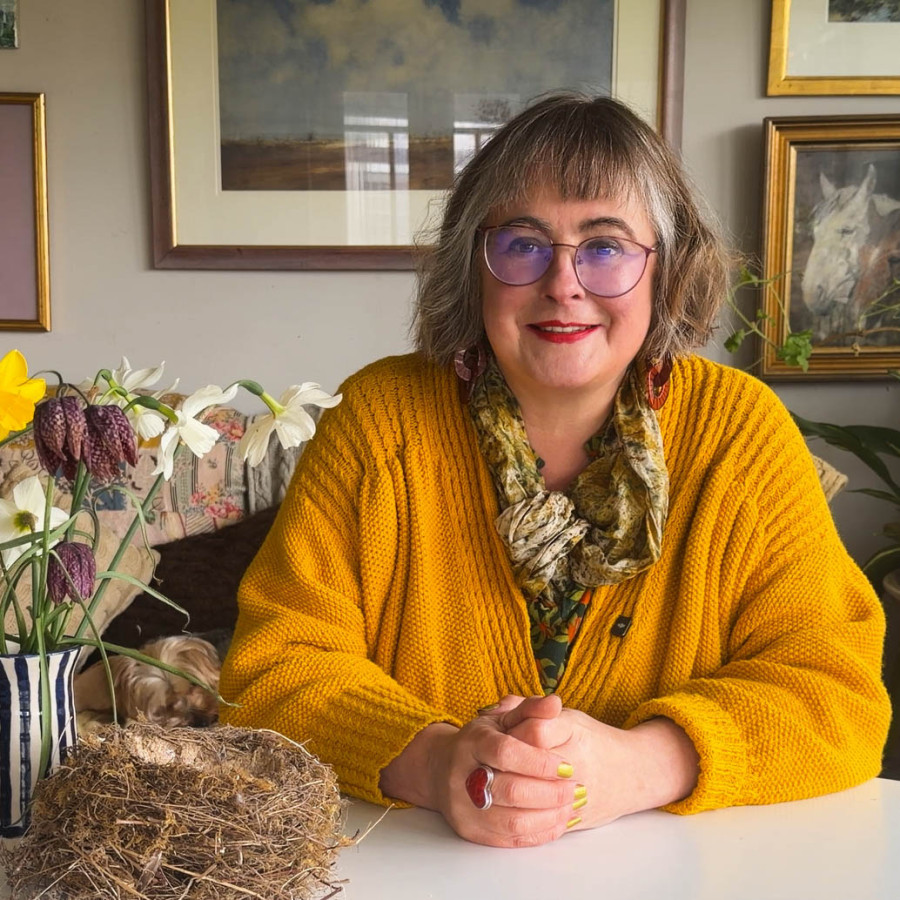
So the third layer, when you’re out there noticing: follow the thread occasionally. Find out what something is actually called. Look up the folk history, the old use. Find out that the snake’s head fritillary is Fritillaria meleagris, that Charles Rennie Mackintosh painted it repeatedly. That kind of knowledge changes how you see a thing.
Going outside in spring does something immediate. The light, the noticing, the naming: each one takes it a little further. From good for you, to connected to something larger than yourself.
How I Protect My Brain From Exhaustion
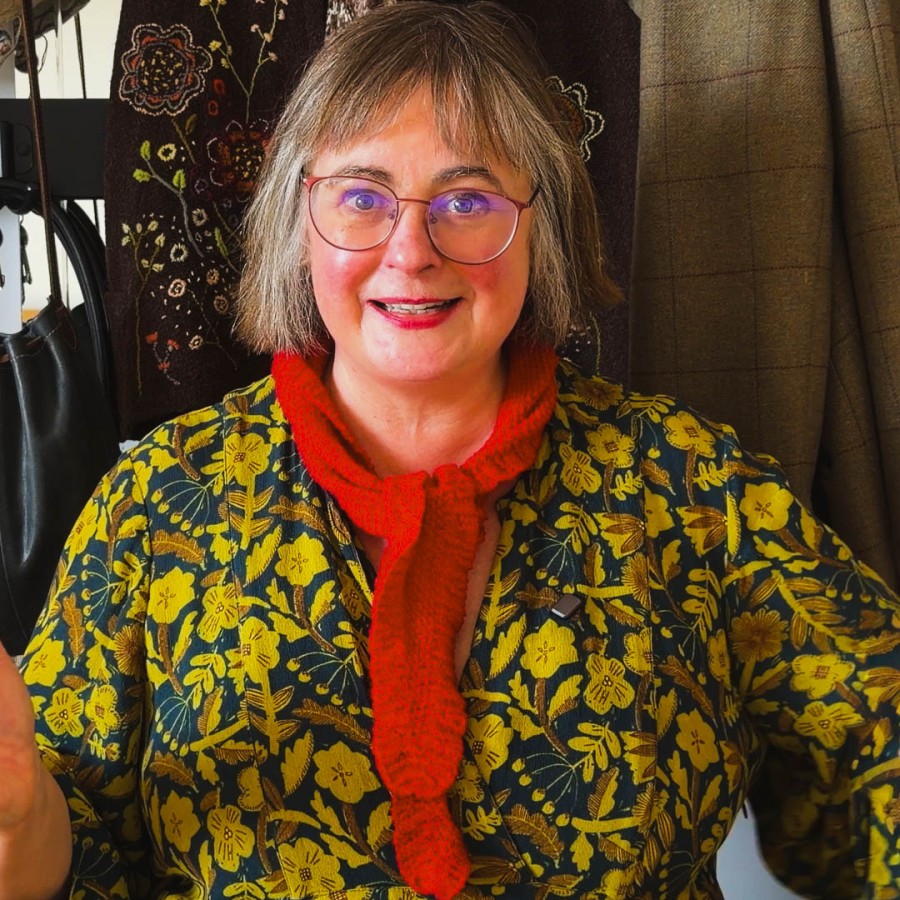
A few weeks ago I mentioned the term soft fascination in passing, and a lot of people got in touch to say they hadn’t heard it before. So this week’s film is about that: what it actually means, why it matters if you live with fatigue or brain fog, and how I use it deliberately rather than just hoping it happens.
The short version: there are two kinds of attention. Focused attention is tiring. It runs in small loops and requires constant effort to maintain. Soft fascination is the other kind: watching waves, leaves, someone kicking a ball in a piazza, where things move gently and your brain can recover without being switched off entirely.
I have Addison’s disease, and managing my energy means I’ve had to get quite deliberate about this. Left to my own devices I will work straight through until I can’t think, which is not a strategy. So I build the breaks in, roughly every two hours, and I know what works for me.
The thing I find genuinely interesting, and talk about in the film, is that plain handwork seems to do something similar from the inside. The kind of knitting or stitching you can do without watching. There’s something about it that smooths the exhaustion of concentrated attention. I don’t know whether there’s research on this specifically, but I’d be surprised if there isn’t.
Two Years, One Walk, and What I Learned About Chronic Pain
Two years ago, over Easter weekend, I damaged my Achilles tendon on a walk. I knew something was wrong at about the mile point. I walked the whole loop anyway.
That was the first mistake. There were several more to follow.
How I Made It Worse
What happened next is, I think, pretty common for people who live with chronic illness. I added the injury to the pile. A bit of frozen peas, keeping it up for an hour, then trying to walk through the pain, then resting, then trying again. Six months of that particular cycle.
By the time I eventually saw a podiatrist and got a scan, the damage was visible - not just on the scan but to the naked eye. One heel is a noticeably different shape from the other. There was clear tendon damage and a lot of bursitis.
I got custom insoles. I was told not to walk through pain above a four out of ten. I tried to follow that advice. It didn’t improve.
Then last summer, my dad became very ill. I was driving to Edinburgh constantly, manual car, the traffic was awful and crawlled along, clutch up and down constantly. The foot got worse. By late July I was struggling to walk from the car park to the hospital entrance. Every step had a burning sensation when I put my foot down - if you’ve had it, you know exactly what I mean. I was very anxious about it, because walking is central to how I think and function.
My Dad died at the end of August. In September I went back to the podiatrist. Another scan. No change. He suggested I think about an operation. He also mentioned, almost as an aside on the way out, that acupuncture had helped some people, though it wasn’t something he could offer.
Acupuncture it was, then. Except there was a five-month waiting list, so I was looking at February.
The Thing That Actually Shifted It
The following day I had a Reiki appointment with Carrie, my Reiki practitioner. I’m a pragmatic person - touch it, feel it, believe it - and Reiki came at me sideways a few years ago and rather upended that. I’ve written about it elsewhere. The point is, I went to Carrie and I talked about the foot. But I also talked about something else that had been on my mind: whether I’d been leaning too hard into being an introvert, to the point where I was becoming genuinely afraid to go out. Whether, in fact, that fear and the foot pain might be connected.
Carrie didn’t laugh. She did some Reiki on the foot and then sent me some links to interesting reading afterwards.
The next morning, for the first time in two years, I got out of bed and walked to the bathroom without that burning pain. There was still discomfort - the tendon hadn’t magically repaired itself - but the pain was different in quality. Manageable.
Over the following weeks it continued to improve. I started walking further. I cancelled the acupuncture appointment because there wasn’t enough pain left to justify it.
What the Research Showed
The links Carrie sent me were not spiritual. They were about the neuroscience of chronic pain, specifically about something called Pain Reprocessing Therapy (PRT).
The idea is this: with acute pain, the brain registers an injury and sends a danger signal. With chronic pain - particularly when anxiety or overwhelm is present - the brain can take over that pain response and maintain it even after the original injury site has stabilised. Brain imaging shows that chronic pain activates different regions than acute pain does; it moves from the part of the brain connected to the physical site into regions associated with memory, emotion, and storytelling.
This is not the same as saying the pain is imaginary or not real. It is entirely real. But the source, for many people, shifts.
The framework made sense of something that had not made sense before. My injury was real and visible. The treatment hadn’t worked. The pain had got worse in a period of intense stress and fear. And it got better when something shifted my sense of safety.
Whether that’s PRT, neuroplasticity, the specific effect of Reiki, or some combination - I genuinely don’t know. What I do know is that I’m walking again.
What I’m Actually Doing Now
The protocol I’ve been following has two main components.
The first is reassurance - telling myself, specifically and out loud if necessary, that I am safe. This sounds slightly absurd and also, for me, it works. Reiki helps with this; it gives me a very particular sense of being in the right place and moving in the right direction. I find it calming in a way that doesn’t require me to understand why.
The second is almost overexposure - going to the places and situations that felt threatening and showing my body that they’re survivable. Concerts. Busy streets. Trains. And stairs.
Which brings me to Naples, where I’m writing this. If you’ve seen photographs of the city, you’ll know it rises steeply from the sea. Most of that rise is done via staircase. I walked to lunch somewhere I thought was nearby and discovered there were 32 flights of stairs between me and the food. That is, it turns out, quite good rehabilitation.
Why I’m Telling You This
I very rarely talk about health directly in this blog. Everyone’s health is different, everyone’s circumstances are different, and I have no wish to give advice about something I’m not qualified to advise on.
But I’m sharing this because I wish I’d known about this a year and a half ago, before the world started to feel like it was closing in.
If you have pain that gets worse under stress, that is sometimes there and sometimes not, that started after an identifiable injury but didn’t improve as expected - it might be worth looking at this research. Not because I’m saying it’s the answer, but because it’s a possibility that doesn’t seem to get much airtime.
Resources
These are the links Carrie sent me, plus the research I found myself:
Books
- The Way Out by Alan Gordon and Alon Ziv — the most accessible introduction to PRT, written by one of the researchers behind the Boulder study
- Unlearn Your Pain by Dr Howard Schubiner — more clinical in approach, also useful
Podcasts
- Tell Me About Your Pain — hosted by Alan Gordon and Alon Ziv
- Like Mind, Like Body — from the team behind the Curable app; covers the neuroscience behind the mind-body connection in chronic pain
Film
- Pain Brain (on Vimeo) — a documentary following the Boulder Back Pain Study and the development of PRT. Features Alan Gordon and shows brain-based approaches to chronic pain in practice.
For the research itself
- The Boulder Back Pain Study: Ashar et al., JAMA Psychiatry, 2021 — the full paper is accessible via PubMed
- University of Colorado Boulder summary (more readable): CU Boulder Today
- And for balance, a sceptical but fair analysis of the research: PainScience.com
Being fully where you are
![]()
Every February I leave rural Scotland and move to Naples for a month. Not on holiday. I take my work with me, my laptop and my phone, and I just... relocate. I rent an apartment with a balcony looking out over the bay, and I do exactly the same work I’d be doing at home, just somewhere else.
People find this confusing. I live in Stirlingshire, gateway to the Highlands, about five minutes from Loch Lomond. My studio is in a meadow that runs down to a little wood. There are deer and buzzards and hares. It is exactly the kind of place the wellness industry tells us we should all be heading towards. And I leave it for one of the most chaotic cities in Europe.
I’ve started calling it my silent retreat, which gets even more confused looks.
What I’m actually doing there
The trip isn’t about Naples specifically, though I love it. It’s about what happens when I strip away all the layers I’ve built up during the year.
Because that’s what happens, gradually.As news gets more distressing, social media gets more toxic, the world feels more overwhelming, and without quite noticing, I start to cocoon. I fill every gap. Cooking with an audiobook on headphones. Walking with a podcast. Checking emails in every spare moment. I get busy for the sake of busyness. I layer on noise and distraction until there’s no space left for anything to get in.
We are not made for 24-hour rolling news. We’re village-gossip-level creatures. We can’t have the whole world’s horror beamed into us without it doing harm. And yet we pile it on, and then pile on more noise to cope with it.
It feels like protection. It is protection, of a sort. But it comes at a cost.
The cost of cocooning
When you armour yourself against the difficult things, you also armour yourself against the good things. You stop noticing. Colour, light, the way a street looks at a particular time of day, the smell of coffee from a doorway. All of that gets muffled along with the horror.
And there’s a wider cost too. Research consistently shows that people who doom-scroll most are actually the least able to help. They don’t have the spare capacity, whether that’s political engagement, financial giving, or simply time. So the very thing that feels like engagement with the world’s problems is actually pulling people further from being able to do anything useful about them.
Taking the armour off isn’t about ignoring what’s happening in the world. It’s about being in a state where you can actually respond to it.
Why a chaotic city works
This is where it gets interesting, because the wellness industry has sold us a very specific story: that restoration means nature, silence, escape. Get to the countryside. Walk in the woods. Find somewhere quiet.
I’m not arguing against any of that. But I am saying it’s not the whole picture. The assumption that cities are depleting while nature is healing doesn’t hold up when you look at the research.
It turns out that what actually restores us isn’t silence or greenery per se. It’s a particular quality of attention that psychologists call soft fascination. This is when things come to you gently, without demanding anything. Waves on a shore. Leaves moving in wind. Washing hanging on a line. A dog sitting on a doorstep. People having coffee at a pavement table. These things give your brain just enough stimulation to be occupied without being overwhelmed, and that’s what allows it to rest and open up.
This is the opposite of rolling news, where one disaster follows another follows a fight. Soft fascination is calm. It comes to you. You don’t have to seek it out.
And crucially, this happens in cities as well as in countryside. Sometimes better.
What the research actually says
I went looking for evidence because I wanted to know whether my experience of Naples as genuinely restorative was just personal preference or something more. What I found surprised me.
There’s a significant body of research, mostly from town planning and environmental psychology rather than the wellness industry, that challenges the idea that nature is uniquely restorative.
A 2013 study by Lindal and Hartig looked at residential streetscapes and found that architectural variation (different building heights, varied facades, surface ornamentation) had a larger effect on people’s sense of restoration than vegetation did. Architecture mattered more than greenery.
Wang and colleagues, in 2023, found that historical buildings scored highest on what researchers call the “fascination dimension,” that quality of holding your attention gently. The rich facades of old buildings, the cultural layering, the sense of time passing through a place: all of this had measurable restorative effects.
A 2008 study by Karmanov and Hamel directly compared urban and natural environments and found that a well-designed city space could have stress-reducing power equal to an attractive natural one.
And a 2021 review by Subiza-Pérez and colleagues concluded that “the typical dichotomy between low restorative built environments and high restorative natural environments needs re-examination.” Historic interiors and courtyards showed restorative potential similar to natural settings.
None of this means nature isn’t good for us. Of course it is. But it does mean that the story we’ve been told, that you need to escape to the countryside to feel restored, is incomplete at best and actively unhelpful for a lot of people.
The elitism problem
This matters because “get out into nature” isn’t available to everyone. Not everyone has access to countryside. Not everyone can afford a retreat. Not everyone lives near green space, and even where parks exist, they’re not always the peaceful havens the wellness industry imagines. The park near my Naples apartment is mostly closed, full of litter, and not remotely restorative.
But almost everyone has access to a street where things are happening. A café where you can sit and watch people. A market. A walk through a neighbourhood with different buildings and doorways and life unfolding.
Telling people that wellness requires nature, and specifically rural nature, creates a gap between what people are told they need and what they actually have. It makes ordinary life feel inadequate. And it isn’t true.
What Naples gives me
Naples works for me because it’s impossible to cocoon there. The traffic alone requires you to pay attention. There appear to be no rules, certainly no markings on the roads, and scooters swerve between cars at speed. In practice, pedestrians are king. If I walk out onto a road, cars will either stop or go around me. But it doesn’t feel like that. You would not wander around with headphones on.
Beyond the traffic, it’s a city of extraordinary texture. Around every corner there’s something. Washing strung between buildings. Shrines tucked into walls. Markets spilling onto pavements. Dogs sitting on chairs. Coffee shops where you can sit and watch it all unfold. None of it is asking for my attention in the way a notification or an algorithm does. It’s just there, and if I’m open to it, it comes in.
After a few days I notice my attention changing. I start off photographing the obvious things: the views, the processions, the washing lines. But soon I’m taking pictures of damp on walls, grass pushing through drains, the colour of a fishing net in a plastic bin. My brain has opened up. I’m noticing beauty in things I’d normally walk straight past.
That’s what soft fascination does. That’s what taking the armour off feels like.
You don’t need Naples
I appreciate that moving to Italy for a month is not available to most people, and that’s not what I’m suggesting. The point is that the practice works anywhere. Deliberately removing layers of noise and distraction. Going out without headphones. Walking slowly. Letting things come to you.
Your street has things worth noticing. Your local café has people worth watching. The buildings you walk past every day have details you’ve never registered. Tate Modern in London is free, and you can go in, find a seat, and just watch people move around the space. That is soft fascination in practice.
Start small. Take a walk without your headphones. Accept that it might feel uncomfortable. It probably will, because you put the armour on for a reason. But try it and see what you notice.
It’s good for your creativity. But actually, I think it’s bigger than creativity. It’s about being properly alive to the world you’re living in.
This blog accompanies my Friday Film “Why Naples?”
I’m Jane, and I run The Studio, an online creative membership for women who want to slow down and make with intention. If what I’ve been talking about here sounds like something you need, you can find out more
Sources
1. Lindal & Hartig (2013) - Architecture > vegetation: https://www.researchgate.net/publication/257104788_Architectural_variation_building_height_and_the_restorative_quality_of_Urban_residential_streetscapes
2. Wang et al. (2023) - Historical buildings highly restorative: https://www.frontiersin.org/journals/psychology/articles/10.3389/fpsyg.2023.1132052/full
3. Subiza-Pérez et al. (2021) - Challenging the dichotomy: https://www.frontiersin.org/journals/psychology/articles/10.3389/fpsyg.2021.717116/full
4. Weber & Trojan (2018) - Systematic review: https://pmc.ncbi.nlm.nih.gov/articles/PMC6256310/ OR: https://bioone.org/journals/environmental-health-insights/volume-12/issue-1/1178630218812805/The-Restorative-Value-of-the-Urban-Environment--A-Systematic/10.1177/1178630218812805.full
5. Karmanov & Hamel (2008) - Urban equal to nature: https://www.researchgate.net/publication/223433110_Assessing_the_restorative_potential_of_contemporary_urban_environments_Beyond_the_nature_versus_urban_dichotomy